Oct 13, 2026Pricing & Quotes
Should You Order Up to the Next Price Break? The Inventory Math
The counter-intuitive quote is real — 72 can cost less than 65. But the extra pieces become inventory. The three-number comparison to run before you take the tier, and the ways to reach one cleanly.

Short answer: the price break is real, the arithmetic is real, and the extra pieces become inventory in your building. Whether ordering up saves money depends on one comparison — the unit saving across the run against what the surplus costs you to hold until it is used, sold or quietly written off.
The counter-intuitive quote is a staple of bulk apparel: you ask for 65, the supplier suggests 72, and 72 costs less in total than 65. The tier logic behind that number — fixed costs spread across the run, prices in steps rather than a slope — is covered in the unit price guide. This article is about the decision the tier creates: take the extra pieces, or stay at real demand.
Table of contents
1. The Trap Has a Pattern
2. The Comparison, in Three Numbers
3. What the Extra Pieces Actually Cost to Hold
4. When Ordering Up Wins
5. Reaching a Better Tier Without Dead Stock
6. The Other Side: Small Top-Ups Cost More Per Piece
7. Cost Impact: Unit Saving vs Carrying Cost
Frequently Asked Questions
1. The Trap Has a Pattern
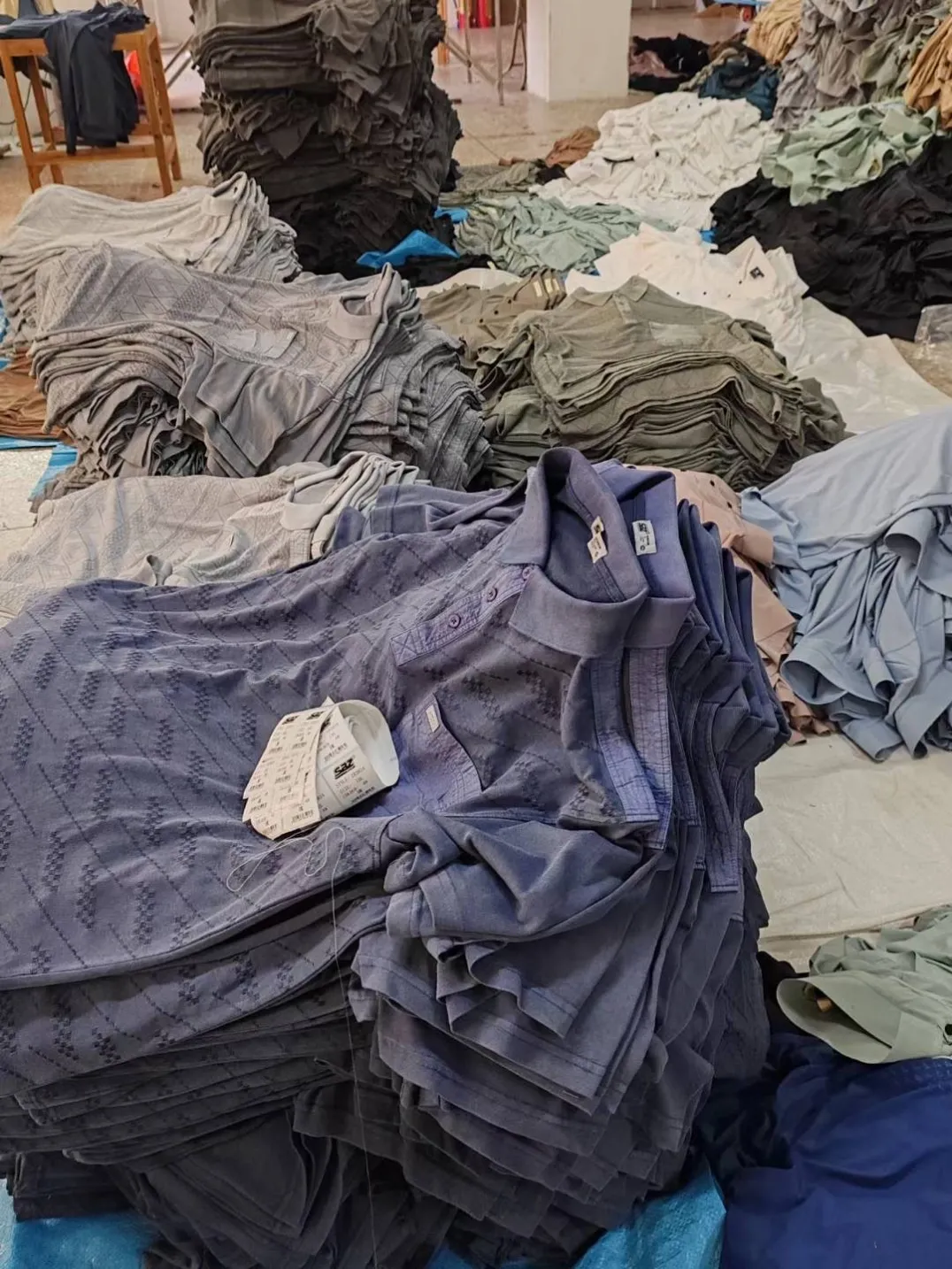
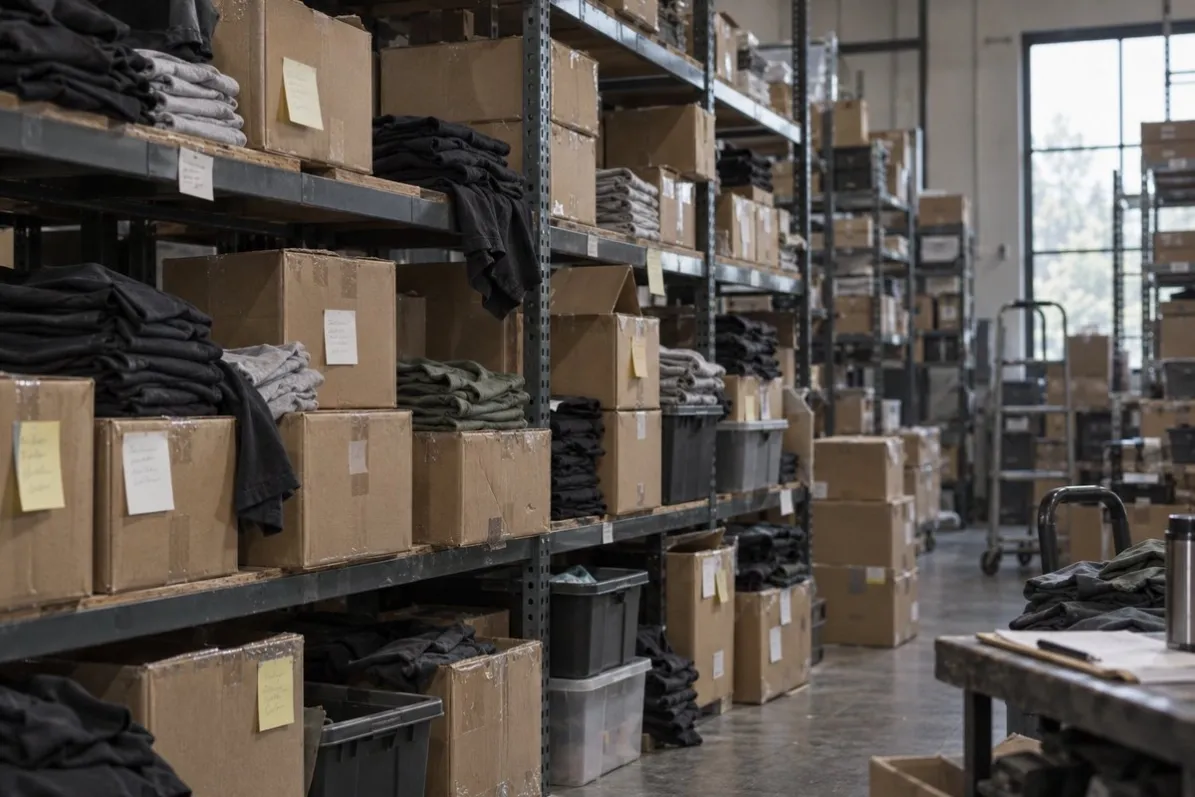
Ask anyone who has bought merch for a venue, a team or a company, and the same story comes back: the order-up looked free at quote time, the spares went on a shelf, and a year later they were being discounted, donated or given away at events to make room.
The pattern is not a reason to refuse every tier — it is a reason to run the comparison before the quote hardens. The saving is visible on the invoice. The cost arrives quietly, spread across the year, and nobody sends you an invoice for it.
Tip: the tie goes to the leaner order. If the comparison is not obviously in the tier's favour in the first minute, the shelf cost — the one number you cannot renegotiate later — decides it.

2. The Comparison, in Three Numbers
Write these three numbers down before you decide:
1. The tier saving — your real demand at the current rate versus the next tier's rate across the whole run, worked with your actual quantities. This is the prize.
2. The carrying cost of the surplus — unit cost of the extra pieces × a carrying rate × the months they realistically sit (a planning figure below).
3. The realistic absorption — how many of the extra pieces will genuinely be used this year: staff turnover, new joiners, sizes that run out, mistakes and swaps. Everything past that number is stock.
The tier wins when (1) clearly beats (2) for the pieces inside (3), with a margin for the ones that never get absorbed. If it is close, stay at demand — the tie goes to the leaner order, because the shelf cost is the one number you cannot renegotiate later.
Note: "we'll sell the extras eventually" is the sentence that fills storage rooms. The extras only win when you can name the mechanism that consumes them.
3. What the Extra Pieces Actually Cost to Hold
Carrying cost is three things wearing one coat:
• Capital — money sitting in garments instead of the business; at almost any cost of capital this compounds on every piece you hold.
• Storage — real shelf or box space, counted honestly, not "we have a corner."
• Obsolescence — logo changes, rebrands, design fatigue and staff turnover erode the value of stock while you hold it. Uniform programmes feel this hardest: pieces that do not get worn this year become last year's version faster than anyone expects.
Programmes commonly plan carrying cost as an annual percentage of unit cost; use your own numbers rather than trusting a default. If the extra pieces only make sense when you assume zero carrying cost, they do not make sense.
4. When Ordering Up Wins
The decision is not always no. Three cases where taking the tier is genuinely cheaper:
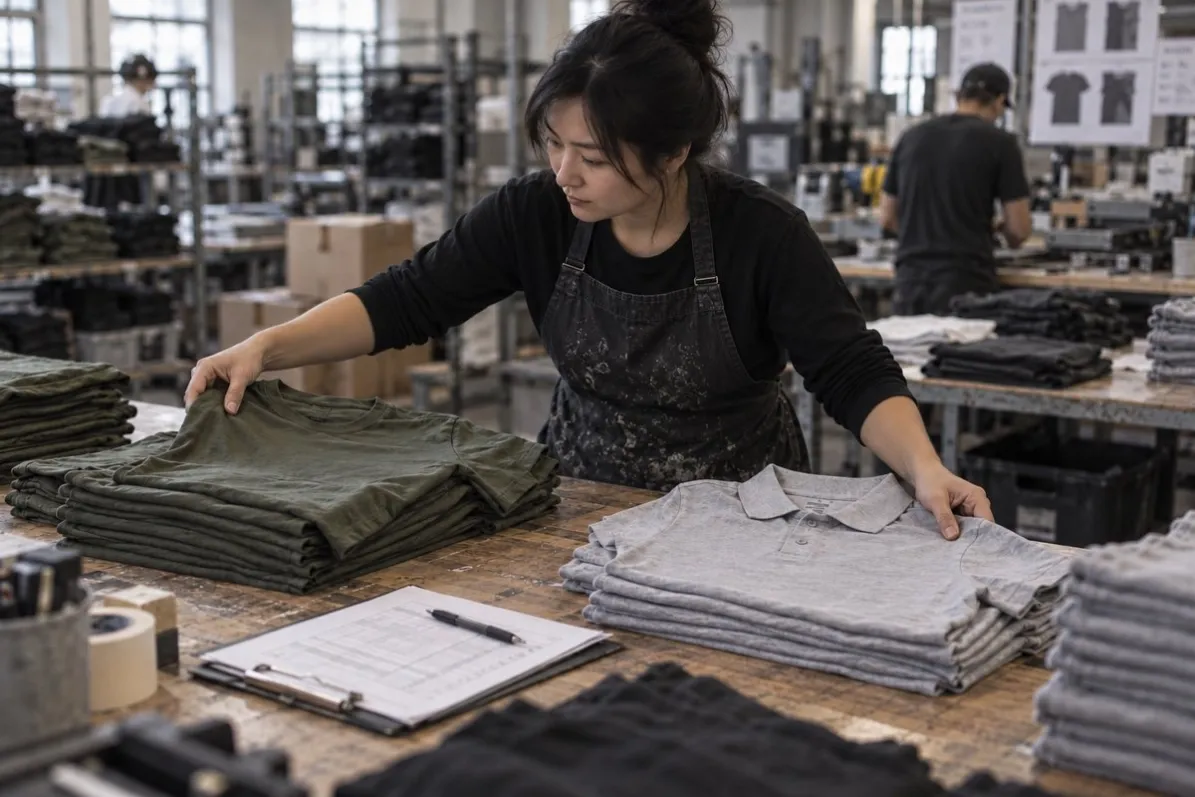
• A stable programme with real turnover — new joiners arrive through the year, the style is locked for the foreseeable future, and the spares double as the size-swap pool. Holding that buffer deliberately is cheaper than two small top-up orders later at small-run rates.
• A near-tier cliff with a small surplus — a large saving at a close tier, with only a handful of extra pieces, is a different animal from doubling the order to reach a better rung.
• The extras have a named destination — events, giveaways, fan sales, a second site. You should be able to name the mechanism that consumes them, not hope one appears.
5. Reaching a Better Tier Without Dead Stock
If the tier is close and demand is real, these routes reach it without stock:
• Merge two styles that both need producing into one run — two genuine orders can share a run and land at a better position. Note the direction of the logic: merge to consolidate real demand, never invent demand to reach a tier.
• Time the second style's reorder to join the first — one planned order instead of two small ones.
• Ask for the tier option in the quote — seeing the price at your quantity *and* at the next tier costs nothing to request, and it turns the decision into arithmetic.
• Ask about a near-tier flex — some suppliers will quote your quantity at the neighbouring rate rather than see the order grow artificially. One question, no shelf risk.
What not to do: order up on a design you are still testing. A tier saving on a garment you may replace next season is a loss with extra steps.
6. The Other Side: Small Top-Ups Cost More Per Piece
The ladder has two ends. A late top-up that sits below the tier you originally hit prices at the small-run rate — a premium per piece — plus a fresh minimum. The cheapest way to need spares is not to order them late; it is to plan the buffer with the original order (see the sampling and sign-off checklist for what else belongs in the plan). Keep a named owner for spares, so the mid-year top-up is a decision someone makes, not an accident that happens.
7. Cost Impact: Unit Saving vs Carrying Cost
On your own numbers: the next tier saves a percentage per piece across the run; the surplus costs a percentage per year to hold; and the break-even is how many of the extra pieces your programme genuinely absorbs within the year. If the comparison is not obvious in the first minute, the answer is the leaner order — that is what "close call" means on a shelf you will look at for a year.
Wrapping up: the price break is real — so is the shelf
Run the three numbers — tier saving, carrying cost, realistic absorption — before the quote hardens. Take the tier when they clearly agree, reach for the merge and near-tier routes when the surplus has no destination, and stay at real demand when the comparison is close. The saving is printed on the invoice; the shelf cost arrives quietly, all year.
Frequently Asked Questions
Is the price break worth it if the tier is only slightly better?
If the tier saving is small and the surplus is real, usually not — the shelf wins. Take the tier when the saving is large and the surplus is small, or when the extras have a destination you can name.
Can I negotiate the tier instead of ordering up?
Sometimes — suppliers will flex a near-tier quantity. It costs one question and keeps your shelf clear. Do not hear a no as a loss; hear it as the real cost of the tier.
What is a realistic carrying cost percentage?
There is no universal figure — plan it as an annual percentage of unit cost, adjusted for your storage reality and how fast your style changes. The number is a thinking tool — the decision is the three-number comparison.
What if I reorder later instead of ordering up now?
Reorder pricing usually keeps the setup benefits, so a later top-up carries less penalty than a first small run would — but it still prices above the rung you could have hit. Planning two smaller orders to land together beats discovering the need alone.
Stuck between two tiers right now?
Request a Quote
— send your realistic demand and the possible order-up quantity, and the quote is built at both tiers, so the comparison is arithmetic instead of a guess. Or order the sample kit
to feel the fabric and print quality first.