Oct 13, 2026Pricing & Quotes
The Decoration Lines of Your Quote: Screens, Locations and Upcharges
Go one level past the headline price: how screens are charged per colour per location, why a back print changes the economics, and where extended sizes and specialty inks add their lines.

Short answer: on the decoration side of a custom apparel quote, five lines carry almost all of the surprises — screen setup and the colour ceiling, the per-location print cost, extended-size and dark-garment add-ons, specialty inks, and one-off art or setup. Read them as separate lines, and "can you do better on price" becomes a list of targeted cuts instead of a wish.
The big picture of how a quote is assembled — blank, decoration, volume, personalisation — is covered in the unit price guide. This article stays on one side of the quote and goes deeper: the decoration lines, what each one is actually charging for, and which ones you can honestly cut.
Table of contents
1. Screens: The Setup Behind Every Screen Print
2. Print Cost Per Location, and Why a Back Print Roughly Doubles Decoration
3. The Two Quiet Add-Ons: Extended Sizes and Dark Garments
4. Specialty Inks: Worth It, or Money You Will Never See
5. Art and Setup: One-Off, and What Happens at Reorder
6. How to Choose: Which Decoration Lever First
7. Cost Impact: What the Decoration Lines Are Worth
Frequently Asked Questions
1. Screens: The Setup Behind Every Screen Print
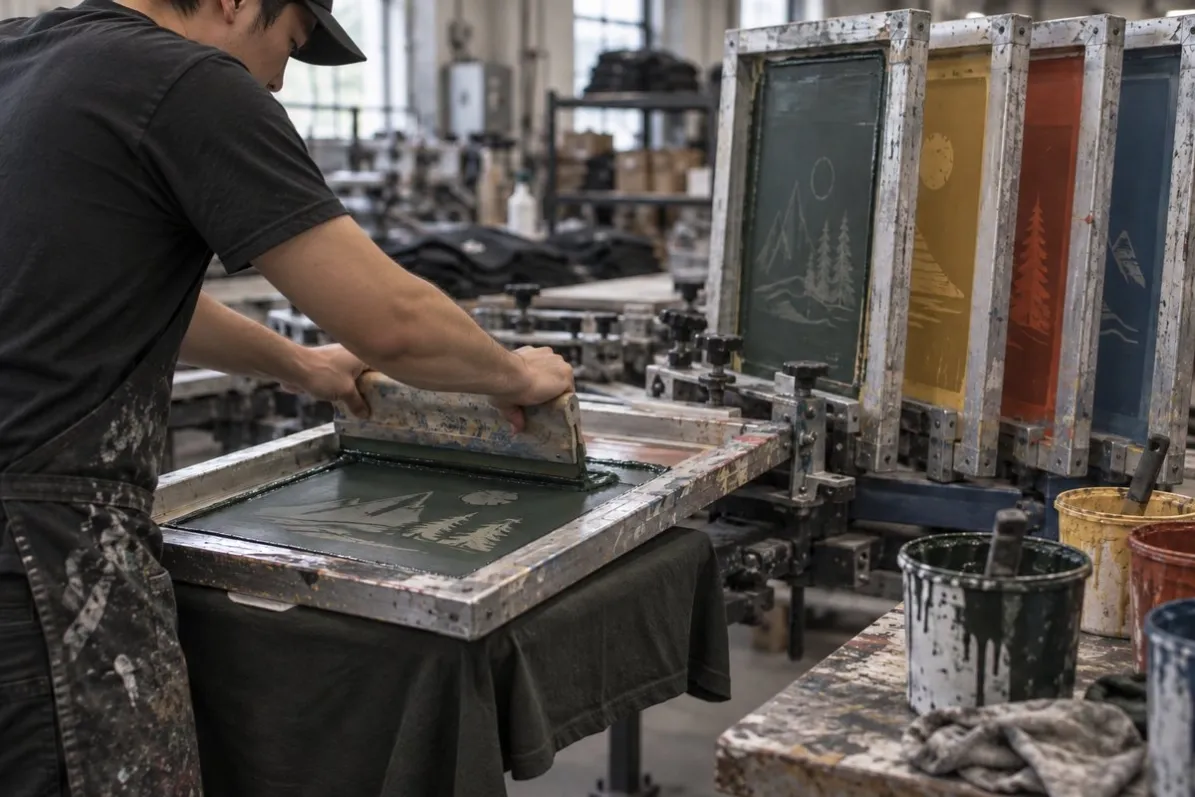
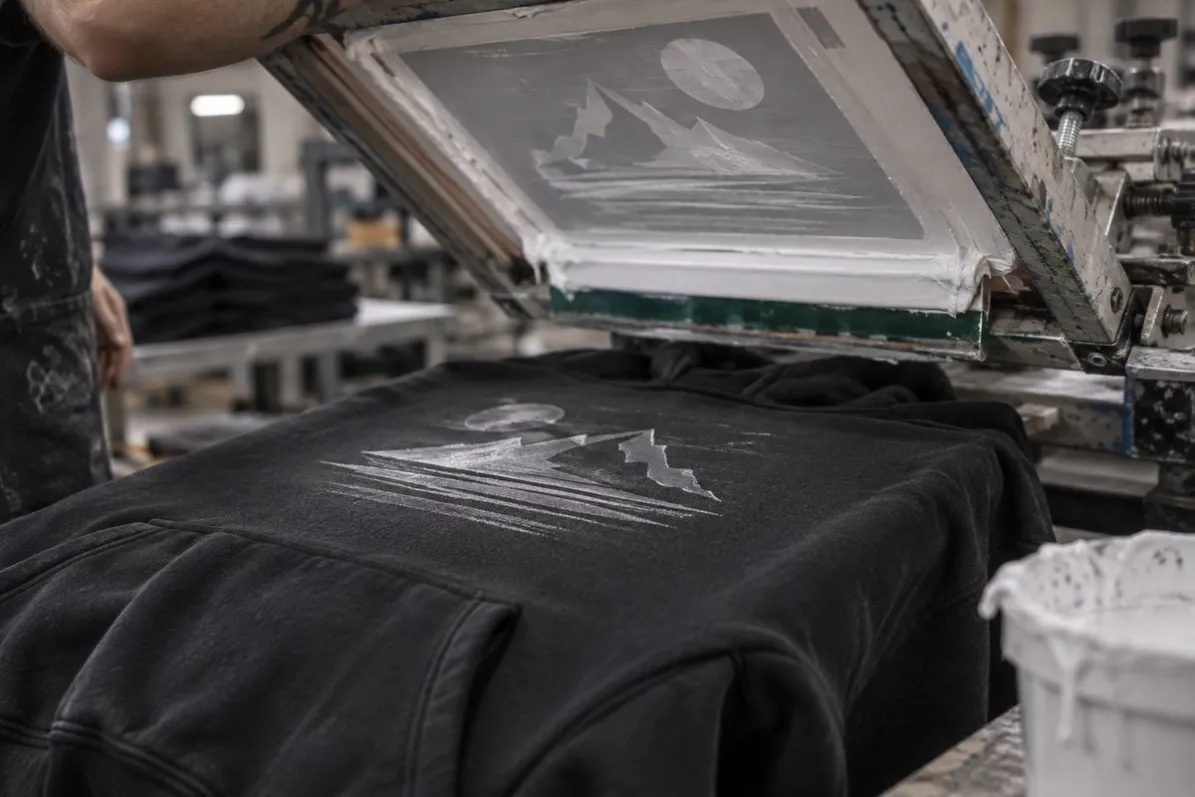
The setup that gets a design onto a press is the screen. One screen carries one colour, and each location (front, back, sleeve) needs its own set — so a three-colour logo on the front and one colour on the back is four screens before anything prints.
In our quoting, screens carry no separate fee from 30 pieces up — the setup is absorbed into the per-piece rate. Below 30 pieces a fixed RMB 300 (about US$40) screen setup applies, and that fixed cost lands hardest on the smallest runs: the same RMB 300 is over US$2 a piece at 20 pieces, and nothing at all from 30 up.
One hard ceiling comes with the method: screen print handles up to four to five colours. Past that, the passes stop being practical and the design belongs to a different decoration method — this is a production limit, not a price to negotiate.
Where this backfires: adding "just one more colour" for a detail nobody will notice. That colour is another screen, another ink, and another layer that can drift out of register — and near the four-to-five colour ceiling, one more colour can push the design out of screen print entirely.
Tip: screen print suits runs from 30 pieces up — below that the fixed setup lands hardest on unit price. If your run sits under 30, price a screenless method alongside before you choose.
2. Print Cost Per Location, and Why a Back Print Roughly Doubles Decoration
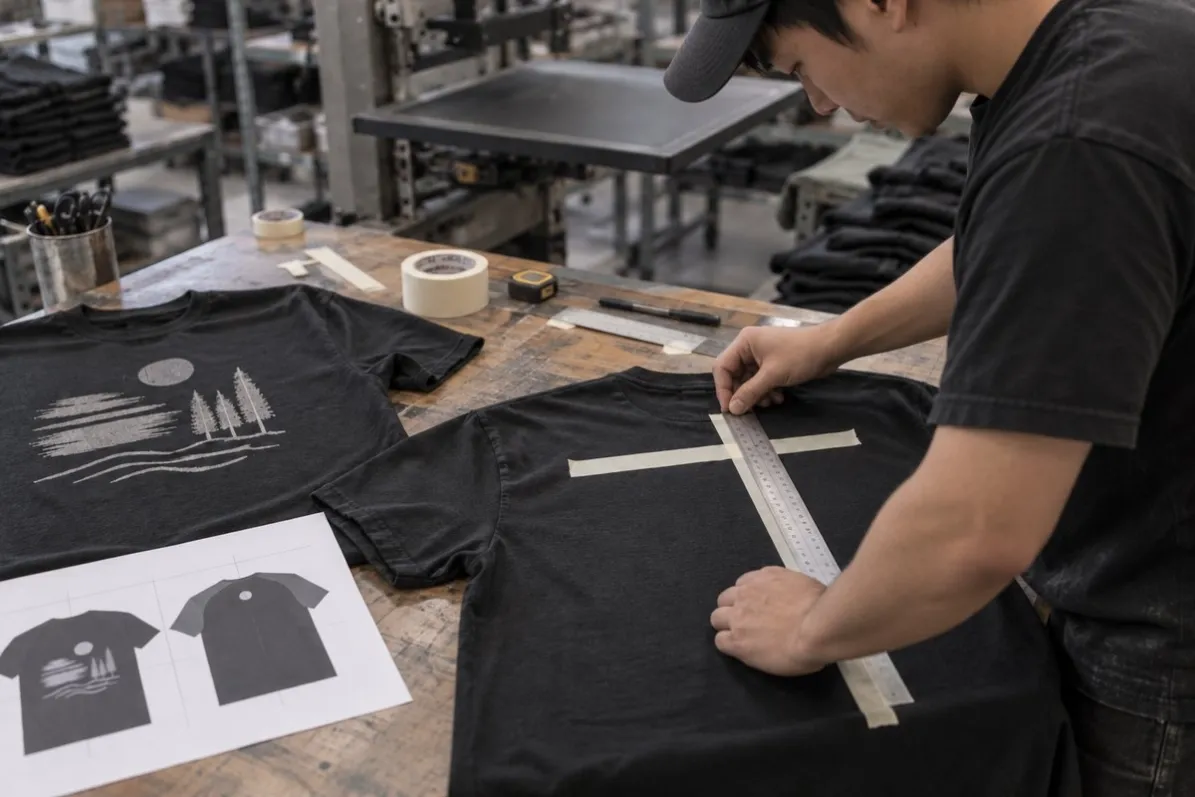
The per-location print charge pays for press time: loading, aligning, curing, and the passes each colour needs. The price follows two physical facts — the area of the design and the number of colours: a small print runs about US$1–1.5 per piece, and designs up to roughly 35–40 cm can be printed; bigger areas and more colours mean more ink and more press passes on every piece.
Front-only orders carry one print run; adding a back print starts a second — and the quote moves accordingly: a second set of screens, a second pass on every piece.
• The back print is rarely "a little more" — it is a second press run per piece. A front-only 200-piece order and a front-and-back 200-piece order are not close in decoration cost.
• Sleeves are the cheap third location — when a design needs an extra home, a sleeve often carries it for less than a back.
• Fewer locations beat smaller prints — shrinking a front print by 2 cm changes little; moving a back print to the sleeve changes the whole line.
3. The Two Quiet Add-Ons: Extended Sizes and Dark Garments
Neither of these is hidden on purpose, but both sit outside the headline rate — and both surprise buyers whose orders skew one way:
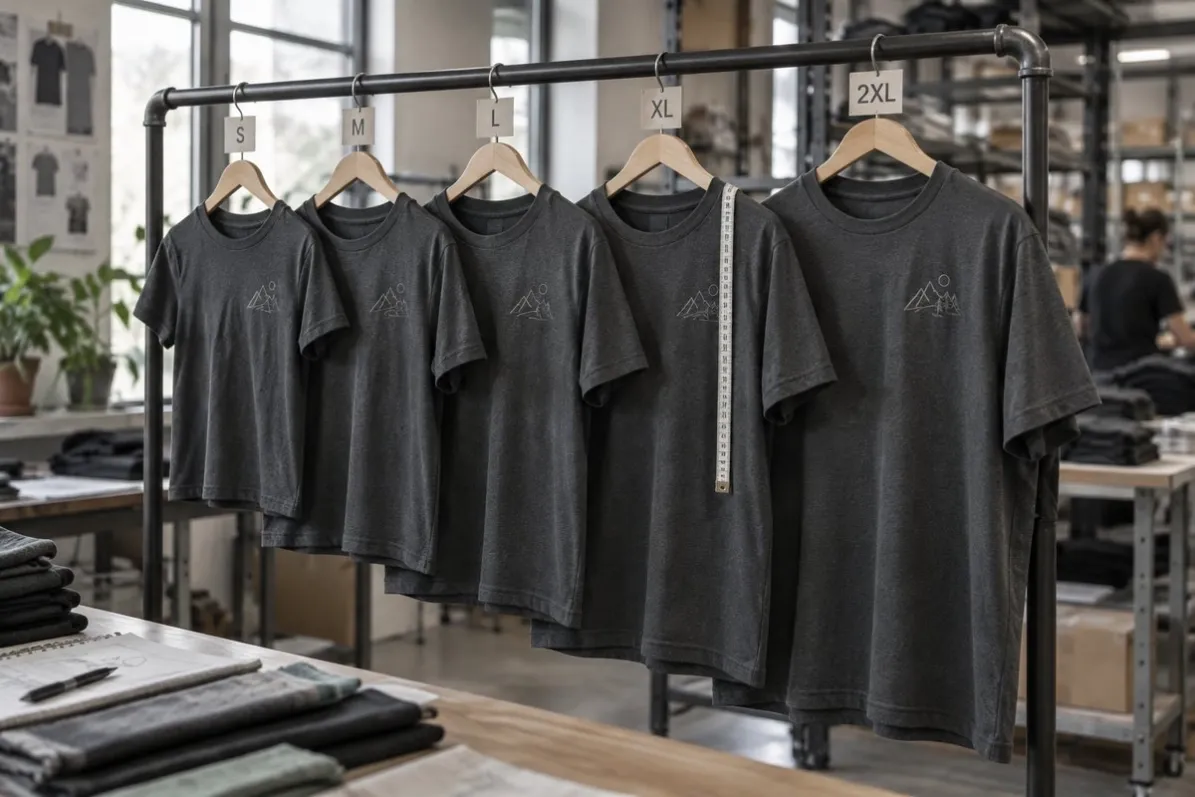
• Extended sizes (2XL and up) carry a per-unit upcharge. The garment itself costs more in those sizes — more fabric, a bigger panel, and lower production scale for the size band — so the real average price depends on your size curve. Ask for the quote on your actual breakdown, not a flat rate.
• Dark garments need a white underbase — a white screen that runs first under the colour print, on every piece. Both common mistakes fail the same way: a quote priced on a white tee and delivered on black adds a line nobody planned.
Where this backfires: approving the quote on a sample-size curve. A team that is mostly L and XL pays the extended-size line on a real share of its pieces; the quote should reflect the distribution you actually need.
Note: ask for the quote built on your actual size breakdown, not a flat rate. A curve heavy in 2XL prices differently from one heavy in M — the quote should see your real distribution.
4. Specialty Inks: Worth It, or Money You Will Never See
Puff, glow, metallic, high-solids, soft-hand — each has its own setup, its own run characteristics and its own care constraints. Two honest tests before you pay:
• Does it survive the wash contract? Specialty inks carry stretch and cure limits; if the print cracks at wash five, the effect was rented, not owned.
• Will the wearer or buyer notice it? On client-facing uniforms, a raised puff logo can read as premium. On staff tees, it is usually money invisible to everyone except your invoice.
Most programmes are served by a standard plastisol or water-based print plus one well-made sample; specialty ink is a decision to make deliberately, not by default.
5. Art and Setup: One-Off, and What Happens at Reorder
The last line covers the work that happens once: art cleanup, separations, digitising, colour matching. It is the line buyers most want to negotiate — and the one most tied to honesty, because clean artwork genuinely costs someone work.
The reorder is where the setup question mostly disappears. Screen print from 30 pieces up carries no screen fee in the first place, and retained art files mean the artwork side is settled too — reorder two starts from a clean sheet instead of re-negotiating setup.
Where this backfires: sending a fresh screenshot on the reorder and letting the supplier "just redo it" — you pay the setup again and risk a second, slightly different interpretation of your logo.
6. How to Choose: Which Decoration Lever First
When a decoration quote needs to come down, pull in this order:
1. Locations, not sizes — dropping a back print does more than shrinking the front by any realistic amount.
2. Colours, on small runs — each colour is a screen; at low quantity, colour count is the multiplier, and past four to five colours screen print stops being available at all.
3. Method, at low volume — DTG or transfers skip screens entirely and win on small runs; screen print wins as quantity climbs.
4. Blank quality last — the blank is the product; cutting it trades visible quality, while the lines above trade only structure.
7. Cost Impact: What the Decoration Lines Are Worth
On the numbers we can put on the table:
• A small screen print adds about US$1–1.5 per piece — removing a colour saves ink and a press pass on every piece, and small prints are where price is most sensitive to area.
• The screen setup is free from 30 pieces and RMB 300 (about US$40) below it — on a 20-piece run that fixed fee alone is over US$2 a piece; the same order at 30 loses the fee entirely.
• A second location is a second print run; moving it to the sleeve recovers part of that line.
• Switching a small-run screen print to a screenless method skips the setup and the colour ceiling — where the crossover sits depends on the design and the run, so price both methods on your numbers.
The one-line summary: quotes are built per colour, per location, per size band. Name those lines and decoration negotiation stops being a demand — it becomes a menu.
Wrapping up: name the lines, then negotiate
Read the decoration side of a quote as five lines — screens, print locations, size and dark-garment add-ons, specialty inks, art and setup — and "can you do better on price" turns into a list of specific, honest cuts. Every line has a physical reason behind it, and most of them can be adjusted without touching the garment your team will wear.
Frequently Asked Questions
Why is the per-piece price higher than the last order when the design is the same?
Check quantity first — screens and setup spread across the run, so the same design at a smaller quantity prices higher per piece by design, not by goodwill. The other common shift is the size curve.
Can the screen fees be waived?
From 30 pieces there is no separate screen fee in our quoting; below 30, a fixed RMB 300 (about US$40) setup applies. If your order sits just under the line, ask what reaching it changes — the fee is exactly why small runs get nudged upward.
Is a digital mockup enough to approve decoration?
No. Screens and inks behave physically — the proof that matters is the printed sample on the actual garment colour. Approve from the physical pull, not the screen.
Does embroidery have the same lines?
No screens — embroidery converts artwork into stitch files once, and that setup line is digitising. The per-location logic still applies, but the cost structure differs.
What if I change the design after the screens are made?
You pay for new screens on the changed colours or locations. That is exactly why artwork should be final before pressing — and why the sample stage exists.
Ready to price your decoration?
Request a Quote
— send the garment, quantity, size breakdown and the decoration idea, and the quote comes back with the decoration lines itemised, so the menu is visible before you order. Or order the sample kit
to feel the fabric and print quality first.