Oct 27, 2026
Dye Migration on Polyester: Why White Prints Turn Pink | Motion
A white print turning pink on navy polyester is dye migration, not a printing error you can inspect away. What causes it, which fabrics carry the risk, and how it is prevented and tested.
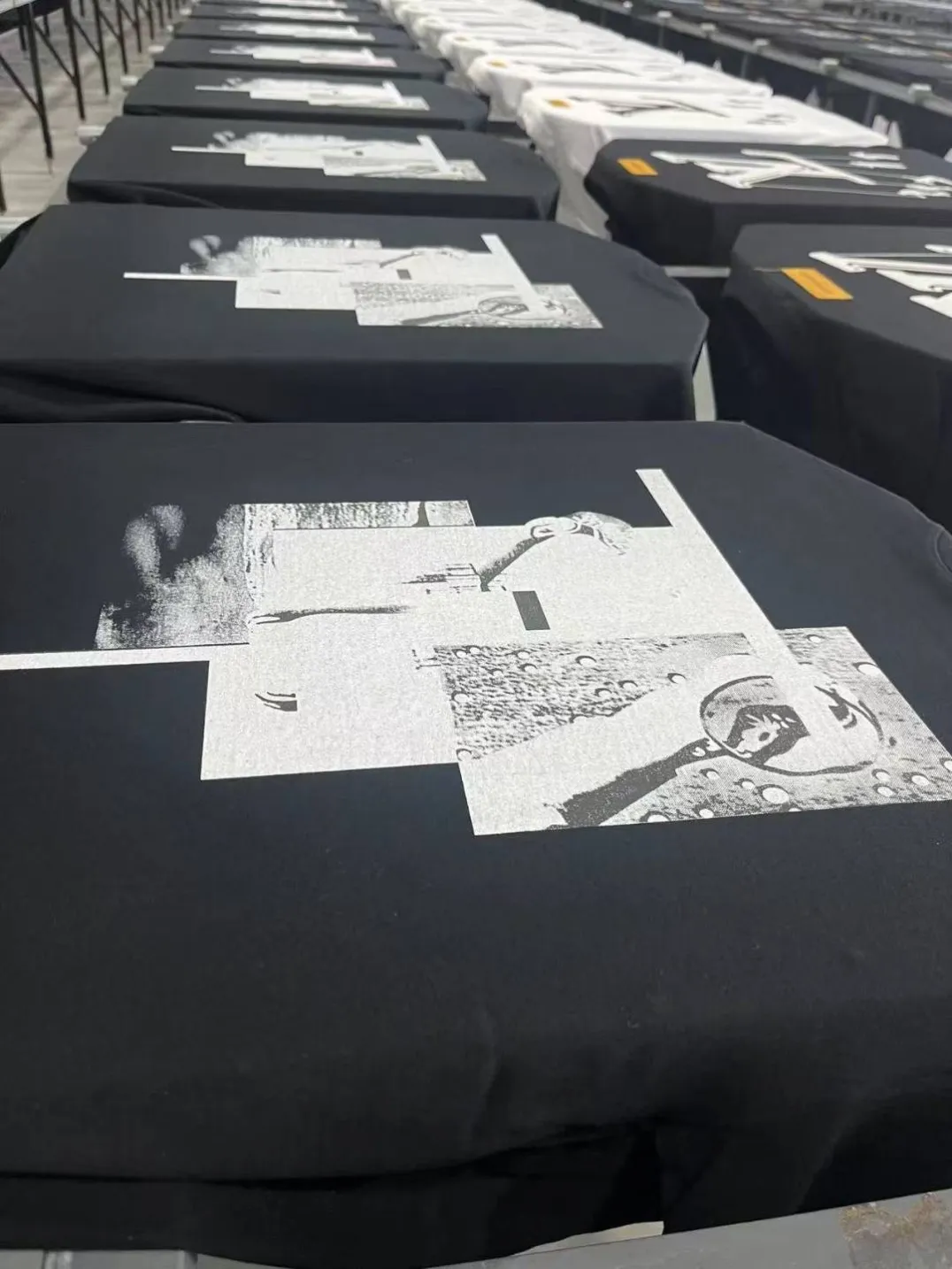
A white print turning pink on navy polyester is dye migration, not a mistake you can catch with a normal inspection. The fabric's own dyes move into the ink film under heat — sometimes hours or days after printing — which is why it is a process risk to prevent at production, not a defect to reject at receiving. This article explains the mechanism, the fabrics that carry the risk, and the prevention and testing that keep a performance-wear programme safe.
What Causes Dye Migration
Polyester is dyed with disperse dyes: small dye molecules locked inside the fibre. Those molecules are heat-activated — that is how sublimation printing works, and it is also why the problem exists. When a decoration cures at standard plastisol or digital-printing temperatures (commonly 150–180 °C), the dyes near the surface re-activate and migrate into the wet ink film sitting on top. As the garment cools, the dye is trapped in the print.
The delayed appearance is what catches buyers off guard. Migration continues while the printed stack sits hot in a polybag or a container crossing the equator, so a shirt that looked clean at the factory can show ghosting a week later. Heat storage — not sunlight, not washing — is the trigger, which is why the test is a hot bag, not a wash cycle.

Which Fabrics and Methods Carry the Risk
The risk is not uniform across an order. It concentrates where three factors meet: disperse-dyed fabric, heat during curing, and an ink film the dye can migrate into.
• Fabric | Risk level | Why
• 100% polyester performance wear (navy, red, dark heather) | Highest | Dense disperse-dye load, light ink films show it fastest
• Poly-cotton blends with poly face yarn | Moderate | Face-side polyester migrates; cotton face masks it
• Sublimation-printed or heavily heat-transferred fabric | Highest | Dyes sit near the surface, already heat-activated once
• 100% cotton | Minimal | Reactive dyes, different chemistry — no migration mechanism
The decoration method changes the exposure. Plastisol on polyester is the classic case: the white underbase is a warm, soft film that disperse dyes love. Water-based and DTG inks on polyester are more exposed still, because their films stay permeable longer during drying. Embroidery avoids the mechanism almost entirely — there is no ink film for dye to enter, which is one reason embroidered marks are the safe choice on sublimation-dyed teamwear.
How Migration Is Prevented
Prevention is a stack of choices, each with a cost, applied in order of effectiveness:
1. Low-bleed ink systems. Inks formulated for polyester block dye movement chemically. This is the first line and costs the least — it is a spec line, not a process change.
2. Polyester-blocking barrier. A dedicated grey or barrier underbase sits between fabric and colour and physically blocks migration. It adds a print pass, so it adds unit cost and slightly more hand — the trade is visible and worth stating in the quote.
3. Lower cure temperature with adjusted dwell. Curing cooler and longer reduces the heat energy available to drive migration. It needs line control — an under-cured print fails wash tests, so this lever belongs to the printer, not the spec sheet.
4. Process discipline after printing. Cooled garments before polybagging, no hot stacks in sealed cartons, and heat-aware freight choices for tropical lanes (the same logic as
hot-humid climate fabric planning
).For a dark-navy training tee with a white chest mark, the honest programme is low-bleed white plus a barrier underbase, verified with the test below. For a marled heather hoodie, the same stack applies with the marl's extra texture consideration (see logo contrast on heather fabrics).
The Bag Test: How to Verify Before Bulk
Because migration is delayed, the acceptance test is a storage test, not a visual check at the end of the line:
1. Print the approval sample with the production ink system on the production fabric.
2. Fold it print-to-print, seal it in a polybag, and hold it 48–72 hours at ambient-to-warm temperature.
3. Unfold and judge at inspection distance: any pink ghosting, yellowing or colour bleed around the mark is a fail.
The bag test reproduces what a carton deck does to a shirt during four weeks of sea freight in summertime — cheaply, and before the bulk run. Write the test into the PO: *"No visible dye migration after 48-hour polybag storage test on the production-cured sample."* The wash-test protocol from the
print durability checklist
then covers the other half of print life.What to Write in the Spec
Four lines carry the whole protection:
• Spec line | What it fixes
• Fabric: named composition per fabric spec fields | Knowing the disperse-dye exposure in the first place
• Ink: low-bleed system named for polyester substrates | Chemical blocking, the cheapest fix
• Underbase: barrier layer required on darks, or "not required" | The pass-count decision is written, not improvised
• Acceptance: bag test 48–72 h, no visible migration | The failure mode gets a test, not an opinion
The fabric GSM and composition fields matter more here than on cotton, because a "heather navy" that is really a poly-face jersey behaves differently from a cotton-face blend — and the dye load follows the fibre, not the label.
Frequently Asked Questions
Why did my white print turn pink after a week?
Dye migration. The fabric's disperse dyes kept moving into the ink film after printing, and the ghosting shows once the dye is trapped. It appears in storage and transit, not at the press.
Does dye migration wash out?
No. The dye sits inside the ink film, not on the surface. Nothing a wash cycle does will pull it back out — which is exactly why prevention and the bag test matter more than any after-the-fact remedy.
Is it worse on certain colours?
Yes. Navy, dark red and dark heather carry the heaviest disperse-dye loads, and light ink films on those backgrounds show migration fastest. White and light-grey inks are the most exposed.
Can migration appear after delivery, even if it passed at the factory?
Yes — that is the defining trait. Heat storage in sealed cartons continues to drive migration for days. A hot container into a tropical port is the classic case, which is why the acceptance test is a 48-hour bag test.
Is embroidery safer than printing on polyester?
For migration, yes — thread has no ink film for dye to enter. Embroidery carries its own considerations on performance fabrics (needle damage, backing choice), but the pink-ghosting mechanism does not apply.
How do I test my specific fabric before ordering bulk?
Ask for a production-cured print on your fabric, bag-tested 48–72 hours, judged at inspection distance. It is a sample-stage cost that protects the whole run, and any printer who works with polyester should offer it without being convinced.
Planning performance-wear printing?
Send the fabric and the artwork — we will quote the ink system, underbase and bag test as spec lines, so migration is a solved problem before the run starts.