Oct 19, 2026
Organizing Spirit Wear for a School? What the Parent Volunteer Actually Has to Decide
Running a school spirit wear order means fixing the garment, price and deadline first, collecting size and payment per family on one form, and ordering a middle-weighted buffer.
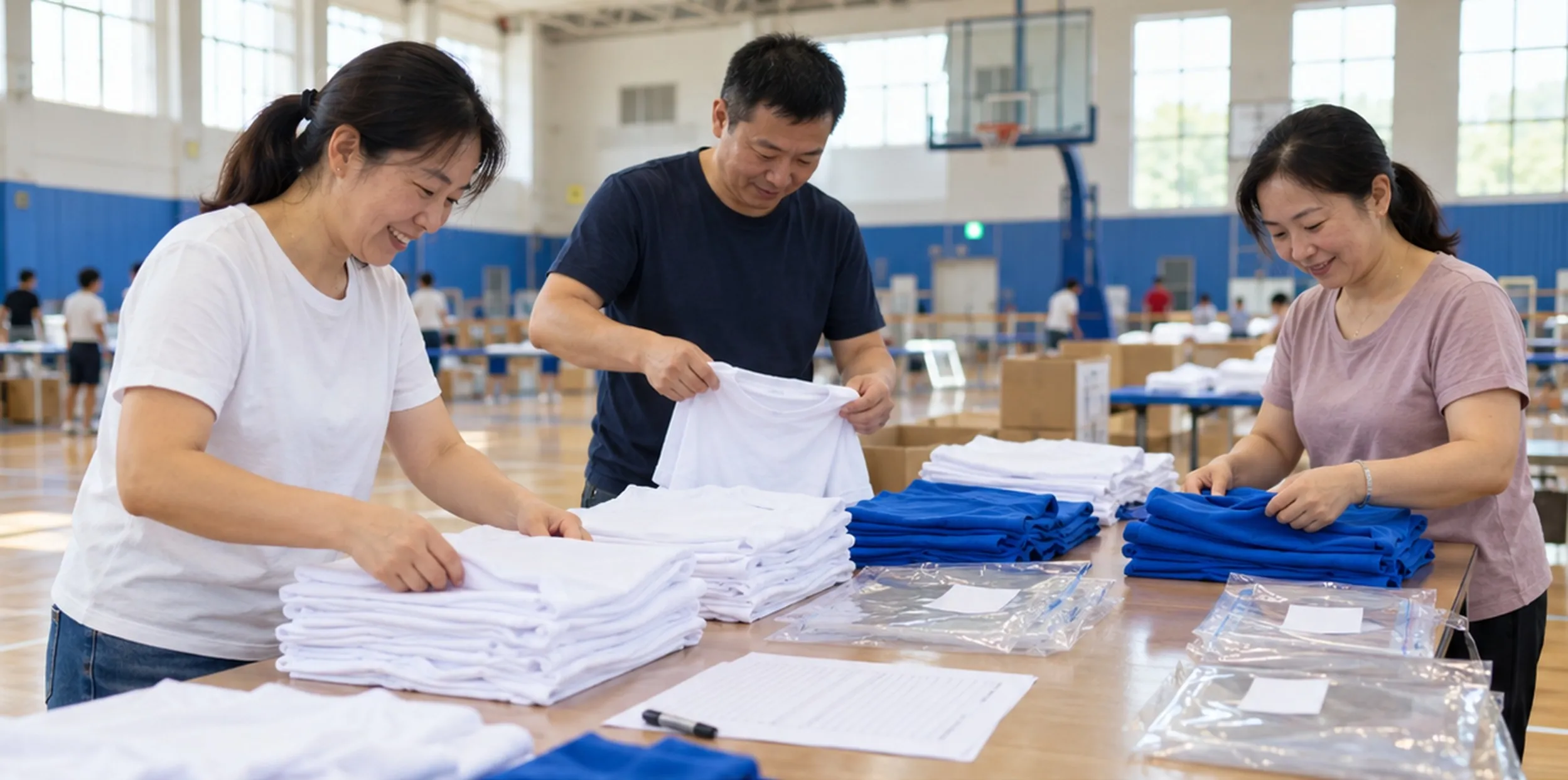
You volunteered to run the school shirt order, and the job is not buying shirts. It is collecting money and sizes from families who answer emails on different days.
Running a school spirit wear order means deciding the garment, the price and the deadline first, then collecting size and payment per family on one form, ordering a small buffer in the middle sizes, and setting a distribution plan before the shirts arrive. The order itself takes days; the coordination takes weeks.
Below: why these orders fail before anyone places them, how to collect sizes and money from hundreds of families, what to order when the count keeps moving, how to run distribution day, and what to do about late joiners and next year.
Why does a school spirit wear order fail before it is placed?
Most school orders do not fail at the printer. They fail in the two weeks when families are supposed to reply.
School spirit wear orders fail on late commitments, not on garment quality. If the deadline, the price and the size cutoff are not fixed before the form goes out, families keep replying, the count changes daily, and the order either misses the event or ships with guesses in place of sizes.
A parent volunteer runs a project with no procurement authority, no staff, and no budget buffer. Every family is a separate decision maker, and a share of them will reply on the last day or after it.
Three things make this worse. The price is usually collected before the order is placed, so a wrong estimate means either a shortfall or a refund conversation. The event date is fixed by the school calendar, not by the supplier. And the size information arrives in whatever format each family prefers: a reply to an email, a message in a group chat, a handwritten note.
Decision · When it must be fixed · Why it cannot move later
Garment and colour · Before the form goes out · Families order what they can see
Price per item · Before collection · Money is collected up front
Size and payment cutoff · Before the form goes out · The order quantity is built from it
Delivery date · At the same time as the order · Production and freight run backwards from it
How do you collect sizes and money from hundreds of families?
One form, one cutoff, one person holding the list. Every additional channel costs a round of reconciliation.
Collect size and payment on a single form with a fixed cutoff date, using the size chart from the actual supplier rather than a generic one. Publish the chart with the form, name one person who owns the list, and treat any reply after the cutoff as a second-round order rather than a change to the first.
The form design matters more than the tool. A paper form passed through classrooms works in some schools. A shared spreadsheet works if one person owns it. A school payment portal works if the school will open it for you. Whichever you use, the fields are the same: student name, class, garment size, quantity, and payment status.
Two fields get forgotten and cause most of the rework. The first is the class or group, because distribution day is organised by class. The second is whether the family wants one shirt or two, because a sibling order is common and doubles the count without changing the roster.
Publish the real size chart, not a generic one
A generic chart is usually a body measurement guide, not a garment measurement guide. Families read it as "my child is a medium" and order a medium, which may be a different garment size.
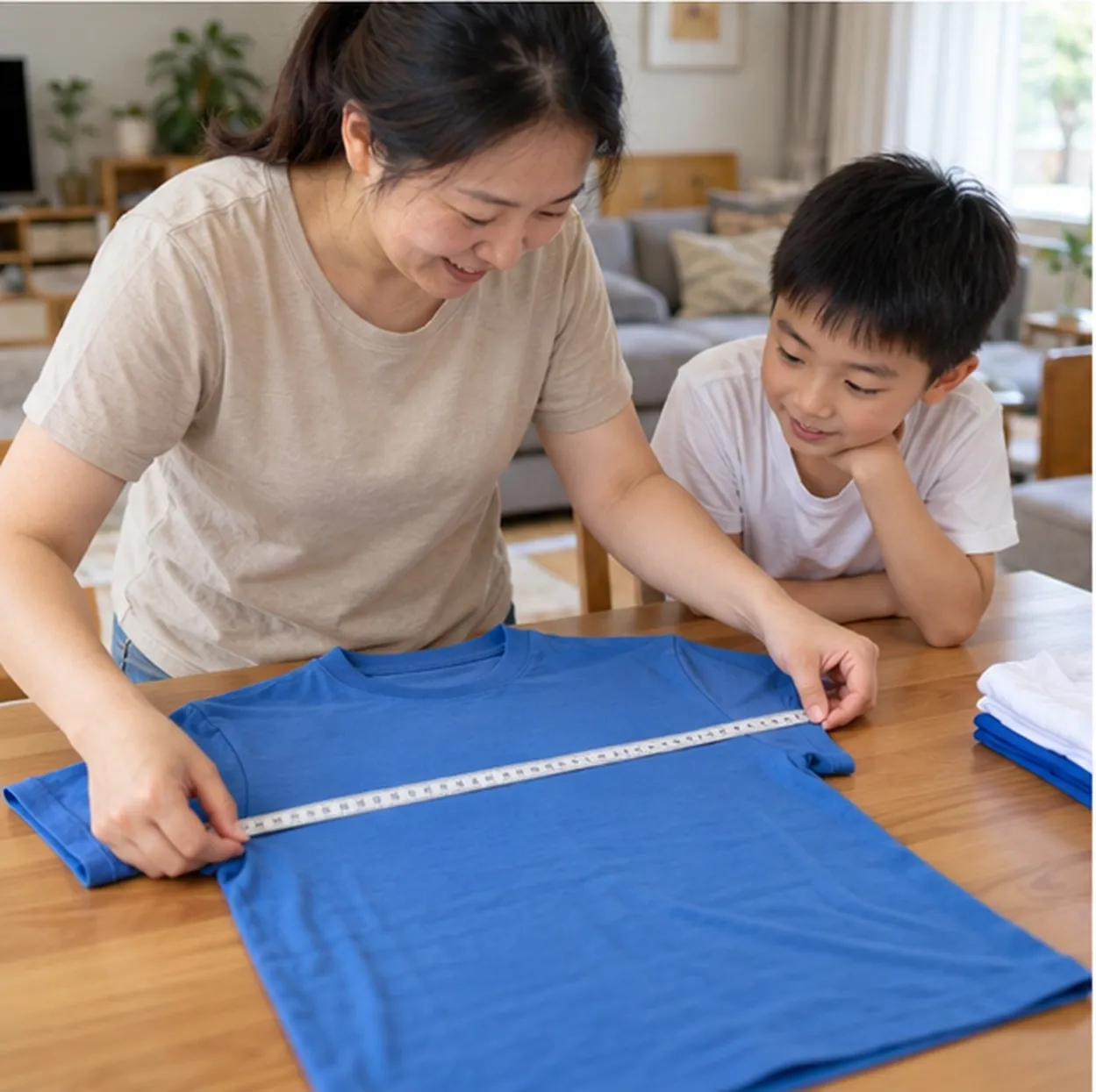
Ask the supplier for the measured chart of the specific product: chest width, body length, sleeve length, flat. Publish that, with the note that it is a garment measurement. A parent with a tape measure can then check one shirt at home and get it right.
For younger year groups, add a note about growth. A shirt that fits in September is tight by spring, so some schools order one size up for the youngest classes and true size for the oldest.
Set the cutoff and hold it
A cutoff that moves is not a cutoff. Publish the date, the time and what happens after it. The cleanest rule is that the form closes, the count is locked, and anything after that joins a second order.
The second order is not a failure. It is the buffer that stops one late family from delaying three hundred shirts.
Collection method · Strength · Weakness
Paper form via class teachers · Reaches families without email · Requires retyping and double checking
Shared spreadsheet · Visible to everyone, easy to total · Needs one owner or it forks into versions
School payment portal · Payment and order in one place · Depends on the school opening it
Message group plus a form link · Fast to spread · Replies and forms get mixed together
✔ One form with a published cutoff beats several collection channels True Every extra channel costs a reconciliation round. A single form with a closing date produces one list and one order quantity.
✘ A generic body measurement chart is enough for a school order False Families read a body guide as "my child is a medium". The supplier's measured garment chart is what lets a parent pick the right shirt size.
What should you order when the final count keeps moving?
Order to the locked count, then add a small buffer in the sizes that always run short.
Order the locked count plus a buffer concentrated in the middle sizes, not spread evenly. Middle sizes absorb most late joiners and replacements, and a buffer spread across every size leaves you with extremes nobody wears.
The buffer is a judgment call, and it is worth writing down why you chose it. A common approach is a small percentage of the total, in the two or three sizes that the school's own roster suggests are most common.
Two constraints shape the order. The first is the minimum order quantity, which applies per design and per print colour, not per size. Mixed sizes count toward the same minimum, so a school ordering 25 pieces across five sizes meets a 25-piece minimum. The second is the print setup, which is often charged per colour or per position, and can be waived above a volume threshold.
For a school that is ordering for the first time, the smallest sensible order is usually one design in one colourway, with the school name or logo, in a size spread that covers the roster. Adding a second colourway splits the count and rarely helps.
Order component · How to size it · Risk if you get it wrong
Locked count · From the closed form · Shortages on delivery day
Buffer · Concentrated in middle sizes · Surplus in sizes nobody needs
Print colours · One or two, decided early · Setup cost per extra colour
Size spread · From the school's own roster · Extremes left over
✔ A buffer concentrated in the middle sizes covers more late joiners than an even spread True Late joiners and replacements cluster in the middle of the curve. Spreading the buffer across every size leaves extremes that nobody collects.
✘ Mixed sizes do not count toward the same print minimum False Minimums apply per design and per print colour, not per size. A school ordering 25 pieces across five sizes still meets a 25-piece minimum.
How do you run distribution day?
Distribution is a logistics problem, not a party. Sort by class, label by name, and have a list at the door.
Sort before the day, not on it
Run distribution by sorting every shirt into class groups with names attached, staffing a table per group, and keeping a signed list of who collected. Distribution fails when shirts are in one pile and one person is searching names while a queue forms.
Labelling is the step that saves the day. A shirt with a name and a class on the bag can be handed out by any volunteer. A shirt in a pile of three hundred identical garments needs the person who built the list.
Two practical points. Ask for the shirts to arrive packed in a way you can sort, which usually means bagged per unit rather than loose. And plan a second distribution window for the families who miss the first one, because some always do.
Keep the record after the day
The list you build for distribution is also the record for next year and for replacements. Keep it: names, classes, sizes ordered, sizes delivered. When a family asks for a replacement in month four, the record answers which size they had.
Handle the exceptions in one batch
Late joiners, wrong sizes and lost shirts all arrive in the weeks after distribution. Handle them in one batch rather than one at a time. Collect the requests for two or three weeks, then place a single top-up order.
A top-up order is subject to the same minimums as the first order, which is why batching matters. Five separate single shirts cost far more than one order of five.
✔ Labelling each shirt with a name and class is what makes distribution fast True A labelled bag can be handed out by any volunteer. An unlabelled pile needs the one person who built the list at the table.
✘ Late joiners should be ordered one at a time as they appear False Single shirts carry the full setup cost with none of the volume. Collecting requests for two or three weeks and placing one top-up order costs far less.
What do you do about next year?
Write down what you learned while it is still fresh, because the volunteer changes.
Next year starts with three documents from this year: the size chart that worked, the roster with sizes as delivered, and the supplier details including the design files. Without them, the next volunteer repeats the whole discovery process.
The handover is the part that gets skipped. Whoever runs the order next year will ask the same questions: which garment, which chart, how many, from whom, by when. A one-page summary answers all of them.
The design file matters too. If the logo was redrawn by a supplier, keep the file and the approval date. Next year's order can then repeat without a new artwork round.
✔ A school order should be built from the supplier's measured garment chart, not a body measurement guide True A body guide tells you about the child. The garment chart tells you about the shirt. Families need the second one to choose a size.
✘ Ordering extra shirts evenly across all sizes protects against late joiners False Late joiners cluster in the middle sizes, and extremes stay in the cupboard. A buffer concentrated in the middle covers the actual risk.
Conclusion
Fix the garment, price and cutoff first. Collect on one form. Order a middle-weighted buffer. Sort by class on distribution day. Keep the record.
Motion coordinates custom apparel projects with selected production partners, from brief and sample confirmation through production follow-up and delivery coordination.