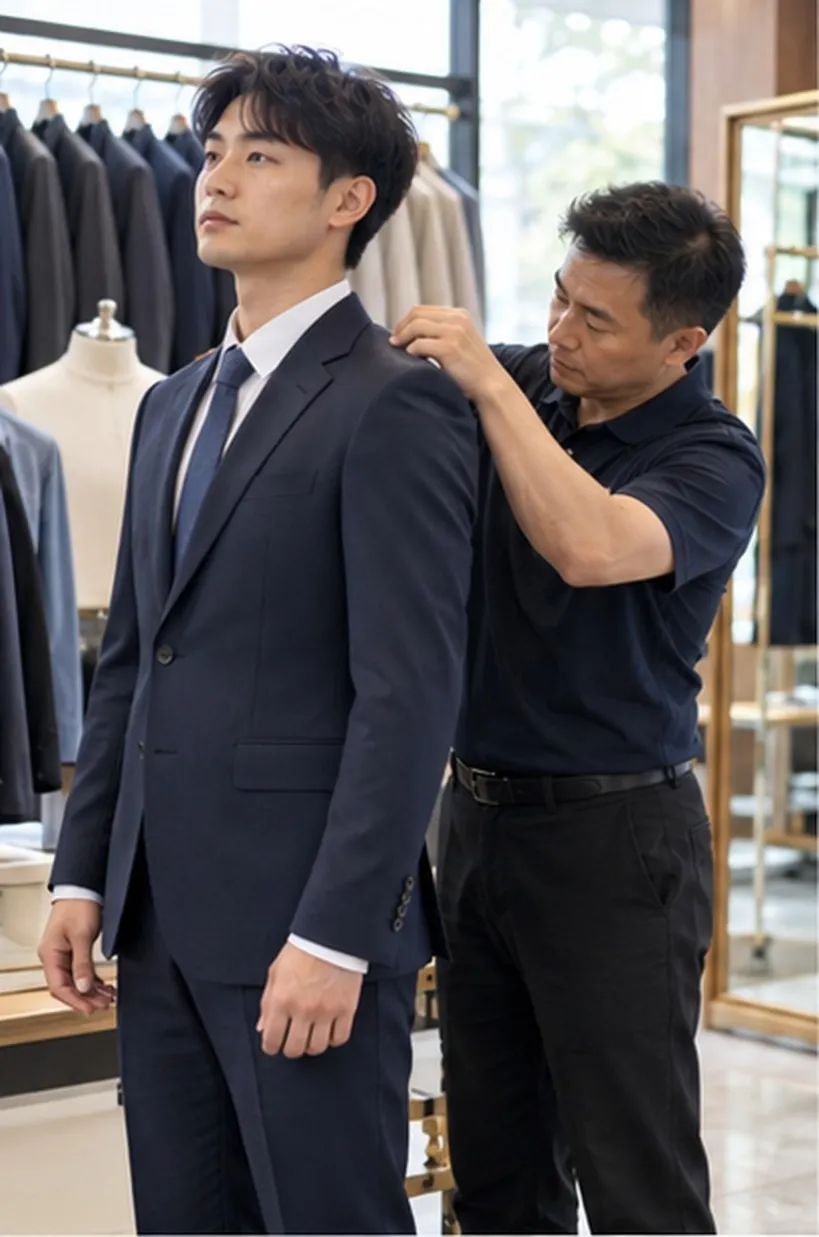
Oct 19, 2026
Ordering Branded Workwear Layers for a Trades Crew?
A branded workwear programme supplies the soft layer, not the certified safety equipment: jackets, vests, aprons and work trousers, specified by abrasion and repairability.

The soft layer is the gap
Most crews already own their certified safety gear. What they do not own is a branded layer that survives the site and still looks like the company.
Ordering branded workwear layers for a trades crew means supplying the soft layer rather than the certified safety equipment: jackets, vests, aprons and work trousers decorated with the company mark, specified by abrasion and repairability, ordered per role, and replaced on a scheduled cycle. Certified high-visibility and protective garments come from a PPE supplier, not from this order.
Below: what belongs in a branded layer programme and what does not, how to specify for wear life, how to order per role when the crew changes, and how to run replacements without emergency single orders.
What belongs in a branded layer programme and what does not?
The line is certified protection versus company identity. They are bought from different places.
A branded layer programme covers garments worn over or beside certified safety equipment: softshell and fleece jackets, padded vests, work trousers and aprons. Certified high-visibility garments, flame-retardant clothing and any item carrying a protective standard belong to a PPE supplier, because those garments are bought to a standard and tested against it.
Why the two get confused
The confusion happens because both look like workwear. A padded vest and a high-visibility vest are both vests, and only one of them carries a protective rating.
The practical test is the label. If the garment carries a standard code for visibility or flame resistance, it is PPE and needs a specialist supplier that can evidence the certification. If it carries a brand mark and a care label, it is a branded layer.
Item · Belongs in this order · Comes from PPE supplier
Softshell or fleece jacket · Yes · No
Padded or quilted vest · Yes · No
Work trousers, plain · Yes · No
Apron · Yes · No
High-visibility vest with a standard rating · No · Yes
Flame-resistant garment · No · Yes
✔ A branded layer programme and a PPE order are two different purchases True One is company identity on a soft garment; the other is certified protection bought to a standard. Mixing them leads to claims neither supplier can support.
✘ A high-visibility vest can be ordered alongside branded jackets from the same supplier False High-visibility garments carry a protective standard and need a supplier that can evidence it. A decorated jacket carries no such rating.
What do you specify for wear life?
Fabric weight, reinforcement at the points that fail, and construction at seams under load.
Specify a branded layer by fabric weight and composition, reinforcement at pockets and shoulders, and double-stitched seams at load-bearing points. A lightweight jacket looks right on a hanger and wears through at the pocket or shoulder within a season, while a mid-weight shell with a reinforced yoke lasts several.
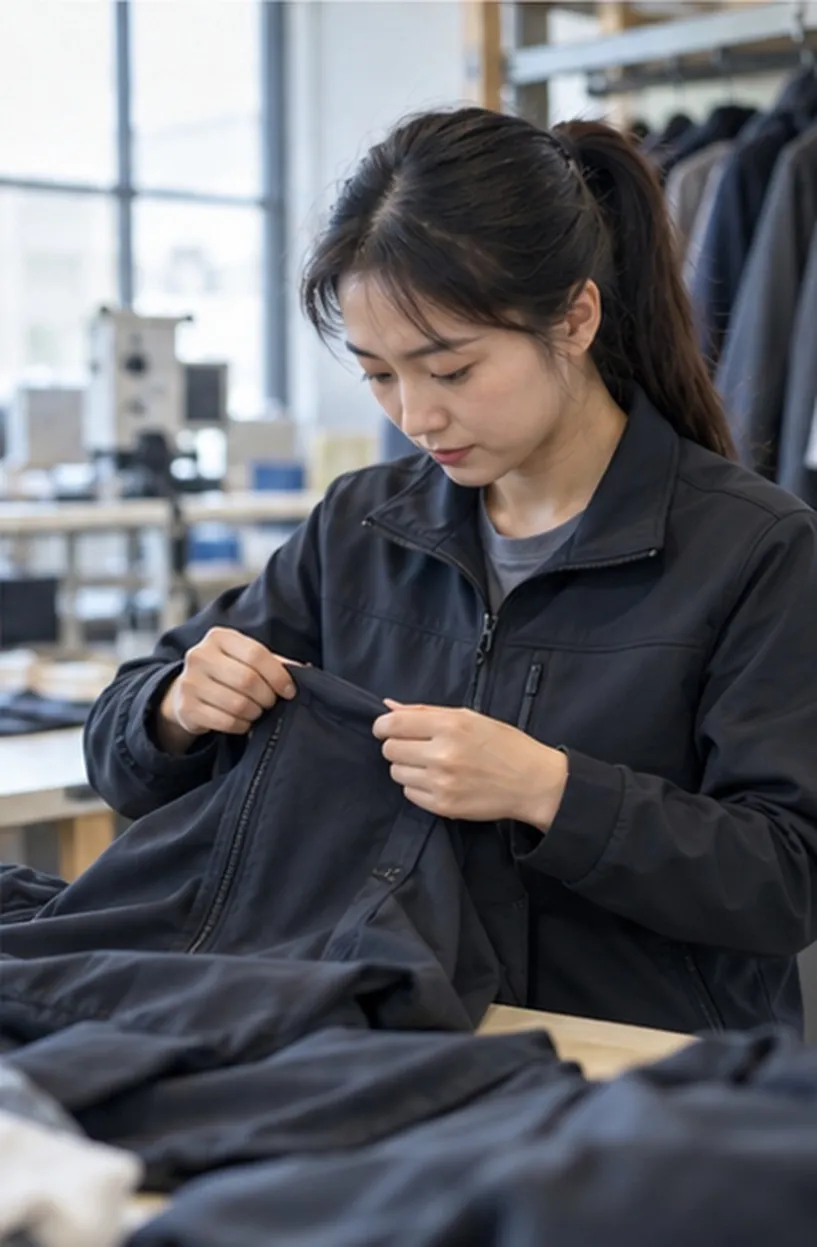
Where a layer fails first
The failure points on a branded layer are predictable. Pockets tear when they carry tools. Shoulders wear where a bag or harness sits. Hems fray where the garment meets boots. Cuffs fail at the seam that takes the movement.
Weight is the cheapest predictor of life. A heavier outer fabric resists abrasion longer, at the cost of warmth and packability, which matters if the crew works in heat.
Construction at seams decides whether a garment can be repaired or has to be replaced. A double-stitched seam can be re-sewn. A seam that has torn through the fabric cannot.
Specification · Why it matters · What to write in the order
Fabric weight · Predicts abrasion life · Minimum weight and composition
Pocket reinforcement · Tools tear unreinforced pockets · Bar-tack at stress points
Shoulder or yoke panel · Wear point under bags and harnesses · Reinforcement panel
Seam construction · Load-bearing seams open when single-stitched · Double stitch at stress seams
Hem finish · Meets boots, frays first · Reinforced hem
✔ Fabric weight is the cheapest predictor of how long a workwear layer lasts True Heavier outer fabric resists abrasion longer at pocket, shoulder and hem. Weight is visible in the spec and correlates with wear life.
✘ Decoration quality matters more than fabric weight on workwear False Decoration fails at the fold points of a worn fabric, and a light fabric reaches that point far sooner. Weight sets the timeline.
How do you order per role when the crew changes?
By role, with a size reference per role, and replacements in batch.
Order by role rather than by name, keeping a size reference for each role so a site manager can assign a size to a new starter the week they arrive. Crews turn over, contractors join for a project and leave, and a named list expires with the people on it.
The two groups a first order misses
Two groups are missed in most first orders. Contractors working alongside the crew usually need to look identical for client perception, and they are not on the internal list. Apprentices are the most likely to need a replacement mid-season.
The structure that works is a short matrix: role, garment type, quantity per person, size reference. It survives turnover because it describes the job, not the person.
Approach · Handles a new starter · Cost per unit
Named list only · Rebuild the list, order one · Highest
Role matrix · Assign from the matrix · Lower
Role matrix plus quarterly top-up · Assign, then batch · Lowest
✔ A role matrix survives crew turnover better than a named list True Named lists expire with the people on them. A role matrix lets a manager assign a size to a new starter without rebuilding the order.
✘ Contractors working onsite do not need branded layers False Contractors are visible to clients and often mistaken for staff. Excluding them leaves the site looking inconsistent.
How do you run replacements?
As a planned line in the budget, not as an emergency.
Treat branded layers as a consumable with a scheduled replacement cycle. Batch replacements quarterly so single garments do not each carry a full setup cost, and keep the approved spec on file so every replacement matches the layer the crew already wears.
Budget from two numbers
Two numbers make the budget predictable: annual crew turnover, and the damage rate by role. A role that kneels or carries tools will consume garments faster than a driving role, and a single blended rate understates the worst role.
Batching also protects consistency. A replacement ordered from an archived spec matches; one ordered from memory does not, and on a site where the crew is meant to look uniform, a mismatched jacket is visible.
✔ Batched replacements cost less per garment than single orders True Every single garment carries a full decoration setup. A quarterly batch spreads that setup across the group.
✘ A replacement ordered from memory will match the original batch False Cloth references and decoration files change. Matching a replacement depends on an archived spec, not recollection.
What should the decoration do on a workwear layer?
Stay legible, stay small enough to survive, and avoid the areas that wear.
Put the company mark where it will not sit under a harness, a bag strap or the wear point at the shoulder, and keep it small enough that partial abrasion does not destroy legibility. A large mark across the back wears at the shoulder blades first, which is exactly where a bag sits.
Three placements that survive
Three placements work on workwear. Left chest, small and horizontal. Upper arm, on a sleeve, visible in profile. Back, small and high, above the strap line.
Embroidery survives workwear better than print. Print on an outer fabric cracks at the fold points, which is where a jacket creases most.
✔ Embroidery survives workwear better than printed decoration True Print on an outer fabric cracks at the fold points where a jacket creases most. Stitched decoration flexes with the fabric.
✘ A large back mark is the best placement for a workwear jacket False The shoulder blades are where a bag or harness sits, so a large back mark abrades first. A small high mark above the strap line lasts longer.
What records should you keep?
The spec, the decoration file and the size matrix, for the life of the programme.
Keep the approved specification, the decoration file with its approval date, and the role size matrix. A programme that runs for years will re-order from these three documents, and without them each order becomes a fresh design exercise with a matching risk.
The record is short and does not need software. It needs to exist somewhere the next person can find it.
✔ Three documents are enough to run a workwear programme for years True The approved specification, the decoration file with its approval date, and the role size matrix cover reordering, restocking and new starters.
✘ A workwear programme needs dedicated software to stay organised False The record is short and needs to exist somewhere the next person can find it. Software is optional; the documents are not.
Conclusion
Buy the soft layer here and the certified gear elsewhere. Specify weight and reinforcement. Order by role. Budget replacements quarterly.
Motion coordinates custom apparel projects with selected production partners, from brief and sample confirmation through production follow-up and delivery coordination.