Oct 3, 2026
Unisex vs Women's Fit: Sizing a Mixed Uniform Order
A women's medium is not a unisex small. How to split a mixed-gender uniform order, when to offer two cuts, and how many spare pieces to hold for fit swaps.
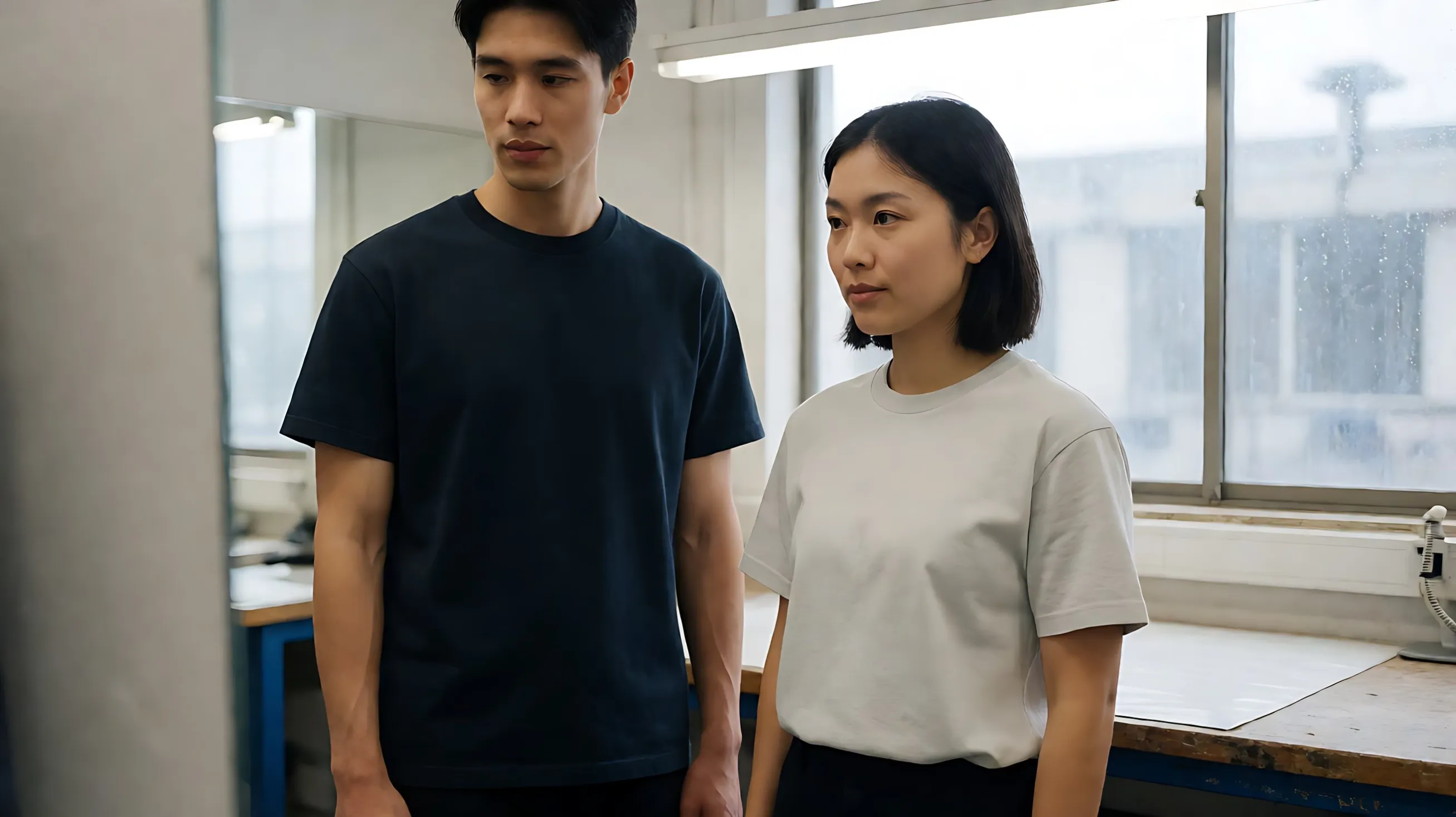
Short answer: when the team is mixed and the garment is worn daily, two cuts usually cost less than one bad fit — and the split is easier than buyers expect. Mixed-gender orders fail on fit before they fail on quality: the print is perfect, the stitching is clean, and half the team is wearing a boxy shirt that reads as a men's medium with their logo on it. A women's medium is not a unisex small — it is a different pattern, graded on a different block.
Below: what "unisex" actually means, when two cuts pay for themselves, and how to build the size split without a fitting session.

Is unisex sizing the same as men's sizing?
In practice, mostly yes. Most "unisex" blocks in custom apparel are men's patterns with a neutral label — cut straight through the body, sized on men's chest measurements. That is not a criticism; it is a manufacturing reality that keeps one pattern covering every wearer. The consequence for buyers: a unisex small is a men's small, and nobody should order one for a women's-medium body expecting the label to mean something else.
Take away: read "unisex" as "men's cut, neutral label" unless the size chart says otherwise — and put the chart, not the word, into the
size spec
.Why does a women's medium fit like a small — or not at all?
A women's cut is graded on a women's block: shaped through the waist, narrower in the shoulder, shorter in the sleeve and body, with armholes cut differently. Sizing it against a men's chart produces nonsense in both directions — a women's M is smaller than a men's M in chest and waist but proportioned differently everywhere else. Buyers who "convert" between the charts at order time import the error into every future order.
True or false
✔ True: the two cuts are two separate patterns wearing the same design. Placement, print size and even fabric behaviour differ slightly between them — which is why each cut gets its own line on the order, not a percentage of the other.
✘ False: ordering women's staff "a size up" in unisex solves the fit problem. It produces a boxier garment with sleeves past the elbow — the fit issue survives, the silhouette gets worse, and the swap requests start anyway.
When are two cuts worth it — and when is one cut cheaper?
• Situation · Better choice · Why
• Mixed team, daily-wear uniforms · Two cuts · Fit drives whether the uniform is worn with confidence
• Event tees, one-day wear · One cut (unisex) · Fit tolerance is high; one pattern halves complexity
• Client-facing front-of-house · Two cuts · Appearance is part of the job
• Very small team of either group · One cut + spares · Below minimums, two patterns double the setup for little gain
The economic question is not the garment price — a women's cut is usually the same or slightly above the equivalent unisex — but the structure: two cuts are two SKUs, and some makers apply minimums per cut ([XX] per style on your quote — confirm before assuming they merge).
Take away: two cuts pay for themselves wherever the uniform is seen as clothing rather than merchandise. For everything else, one unisex cut with a real size curve beats two half-empty patterns.
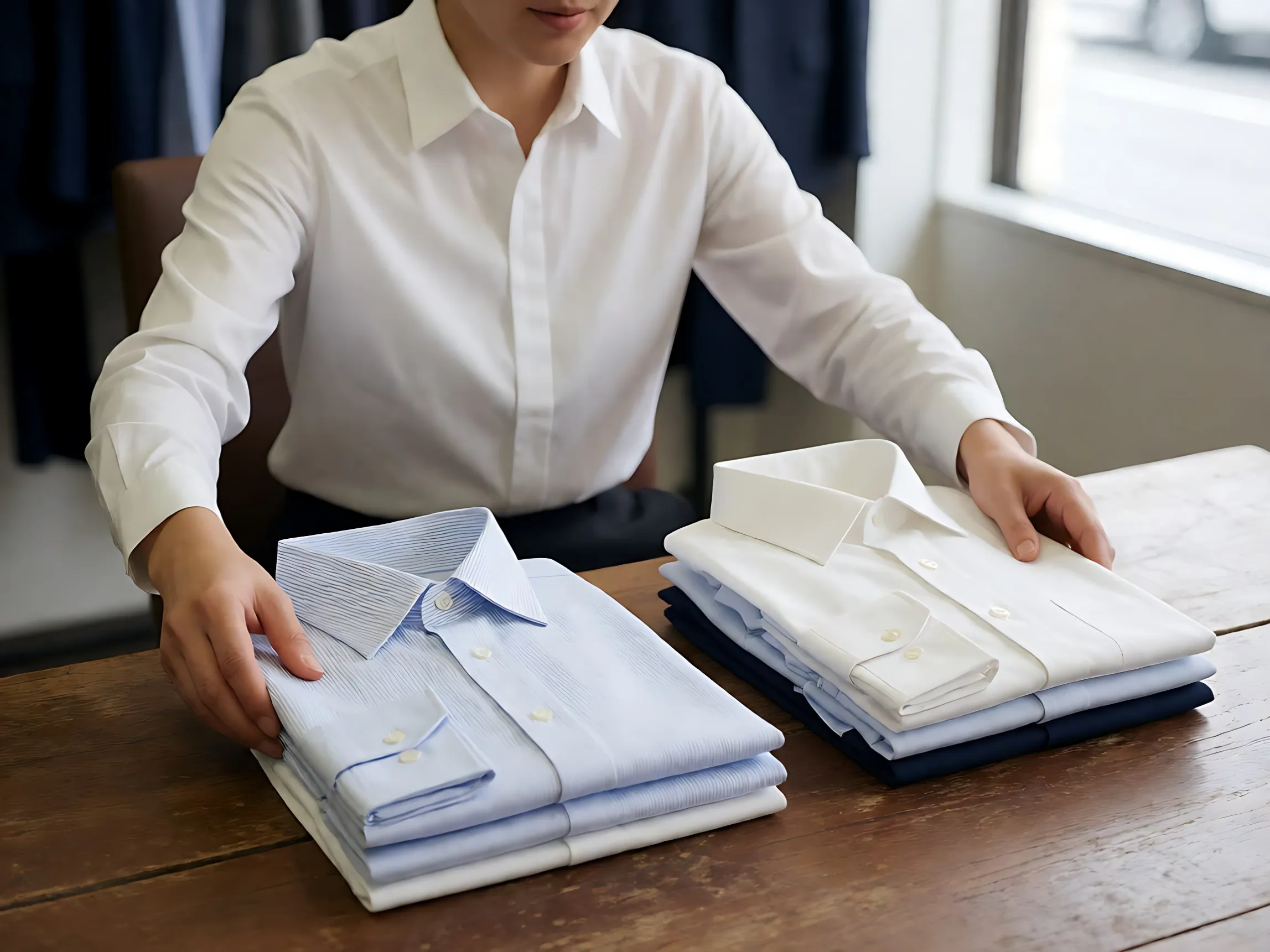
How do you build the size breakdown without a fitting session?
Collect cut preference and size at the same time, on one form — the same roster discipline as any
staff size breakdown
: each person picks the cut they wear and the size they wear in that kind of garment, against a published measured chart for each cut. The published women's chart is what prevents the "converted" guess; the form's cut column is what prevents the warehouse from deciding for you.Hold spares in the sizes that always run short — the upper end of the women's curve and the middle of the unisex curve ([XX] pieces, sized to your swap history).
Take away: one form, two columns, published charts for both cuts. The fitting session is a luxury; the honest chart is the requirement.
Does the logo sit in the same place on both cuts?
Mostly, with adjustments. Placement is measured from landmarks (
the tolerance method
) — the collar seam and shoulder seam exist on both patterns — but a shaped side seam and different armhole geometry mean the same centimetre offset reads slightly differently on each cut. Programmes that care about symmetry across the team set the placement spec per cut, and the print size scales to the smaller front panel of the women's pattern (print size by garment size
).Take away: one placement spec, written per cut, is three extra lines on the order — cheaper than the "why is her logo bigger" conversation.
What do two cuts cost you beyond the garment?
Three structural costs, all confirmable at quote: separate minimums if the maker applies them per cut ([XX]); a slightly heavier size-curve management load (two curves instead of one); and a second SKU in every future reorder. None of these are arguments against two cuts on a daily-wear programme — they are arguments for deciding deliberately rather than discovering them at the second order.
Take away: the cost of two cuts is administrative, not financial — decide with the reorder in mind, and the structure holds.
Frequently Asked Questions
Is unisex sizing the same as men's sizing?
Mostly, yes — unisex is usually a men's block with a neutral label. Order from the published size chart, not from the word on the label.
Why does a women's medium fit like a small?
It does not — it fits like a women's medium, on a different block. Converting between the charts is where mixed orders go wrong; each cut is ordered from its own chart.
Should I order men's and women's cuts for staff uniforms?
For mixed teams in daily-wear, client-facing or hospitality programmes, yes — fit drives whether the uniform gets worn with confidence. For one-day event wear, one unisex cut is usually enough.
How do I collect sizes for a team without a fitting?
One form, two columns: cut preference and size, against published measured charts for each cut. Collect at offer or enrolment, and hold spares in the sizes that historically run short.
Does a women's cut shirt cost more?
Usually the same or slightly above the equivalent unisex; the real difference is structural — two SKUs and sometimes two minimums ([XX] per style, confirm at quote).
Can I mix men's and women's sizes in one order?
Yes — both cuts count toward the order total; whether minimums merge across cuts is a per-maker question to confirm in writing before you split.
How many spare shirts should I keep for new staff?
A deliberate buffer in each cut's core sizes ([XX]), sized to swap history and hiring rate — the same spare logic as any uniform programme.
Does the logo sit in the same place on a women's cut?
Measured from the same landmarks, with the spec written per cut and print size scaled to the smaller front panel. Three lines in the placement spec prevent the whole conversation.
Sizing a mixed team?
Request a Quote
— both cuts quoted on one order, size curves planned per cut, spares included in writing.FACTS