Oct 3, 2026
Trade Show Apparel: Planning Backwards From a Fixed Date
A trade show date will not move for your shirts. Build the deadline chain backwards from booth day — sampling, production, freight — plus what rush really costs and how to rescue a slipping timeline.
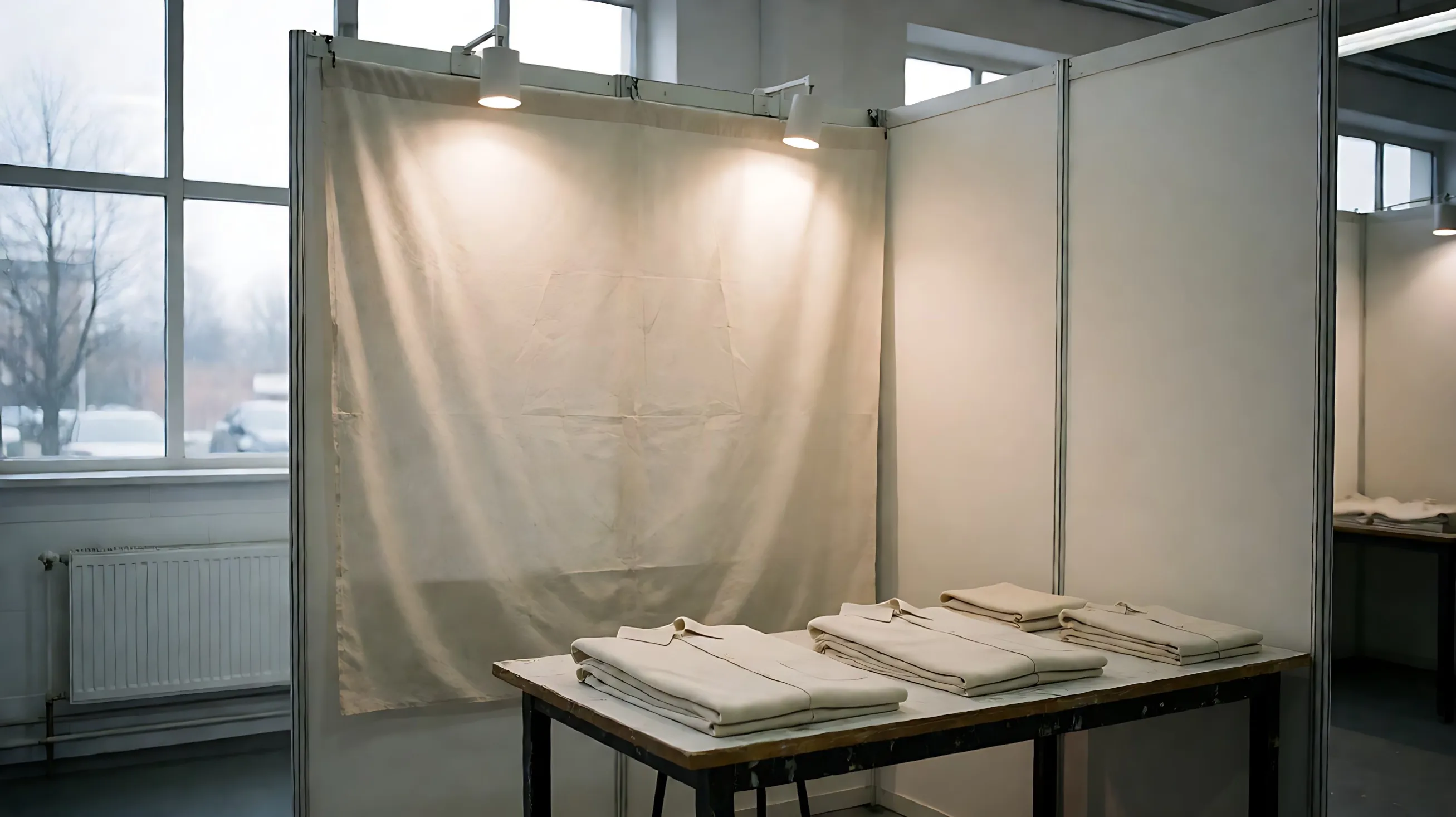
Short answer: work the chain backwards from booth day and let it answer — production, sampling with a revision round, freight and customs, then publish the release-by date for artwork. The show opens whether or not your shirts arrive. Booths are booked a year out, flights are bought, the stand is built — and somewhere a marketing manager is ordering staff shirts two weeks before doors, because apparel is always the last line on the checklist. When it slips, the fallbacks are ugly: mismatched staff, an empty giveaway table, or overnight freight that costs more than the garments.
Trade show apparel is deadline planning first and garment selection second. Below: the chain, the three order types, what rush really costs, and the rescues when the timeline slips.

Why don't trade show dates move for your order?
Every other deadline in a custom apparel order is negotiable — except the one attached to an event with tickets sold. The show date is not a target; it is the specification. Everything upstream — sampling, production, freight, customs — either fits inside the date or the order fails at full cost.
The failure is rarely a bad print. It is compression: design approved late, sampling skipped "to save time", production booked into the pre-show crush when every exhibitor in your industry is booking the same fortnight, freight upgraded in panic. Each decision is locally reasonable and jointly fatal.
Take away: treat the booth date as immovable input, and buy every other day in the chain as early as you can. Time bought in week one costs nothing; the same week bought at the deadline costs a rush premium.
How do you build the deadline chain backwards from booth day?
Write the chain from the end, each stage dated by the one after it:
• Booth day. Garments in hand, not in transit — budget distribution a day before travel.
• Final delivery, [XX] days before travel: sorted, counted, packed by wearer or by box.
• Freight, [XX] days domestic ground, [XX] days cross-border — where customs adds its own window, and the
importer-of-record questions
are cheaper to answer before shipping than at the border.• Production, [XX] weeks from released approval sample to finished goods.
• Sampling and approval, [XX] weeks including one revision round — because artwork on a booth shirt always needs one revision round.
• Artwork and sign-off: design agreed, files final, staff sizes collected.
Add a buffer week between production and freight, and the chain is done. The full arithmetic for any deadline-driven order is the
backwards lead-time timeline
.Take away: date every link, then publish the chain to everyone who can break it — designers, booth leads, finance. A chain that lives in one inbox breaks in that inbox.
What should you order for a show?
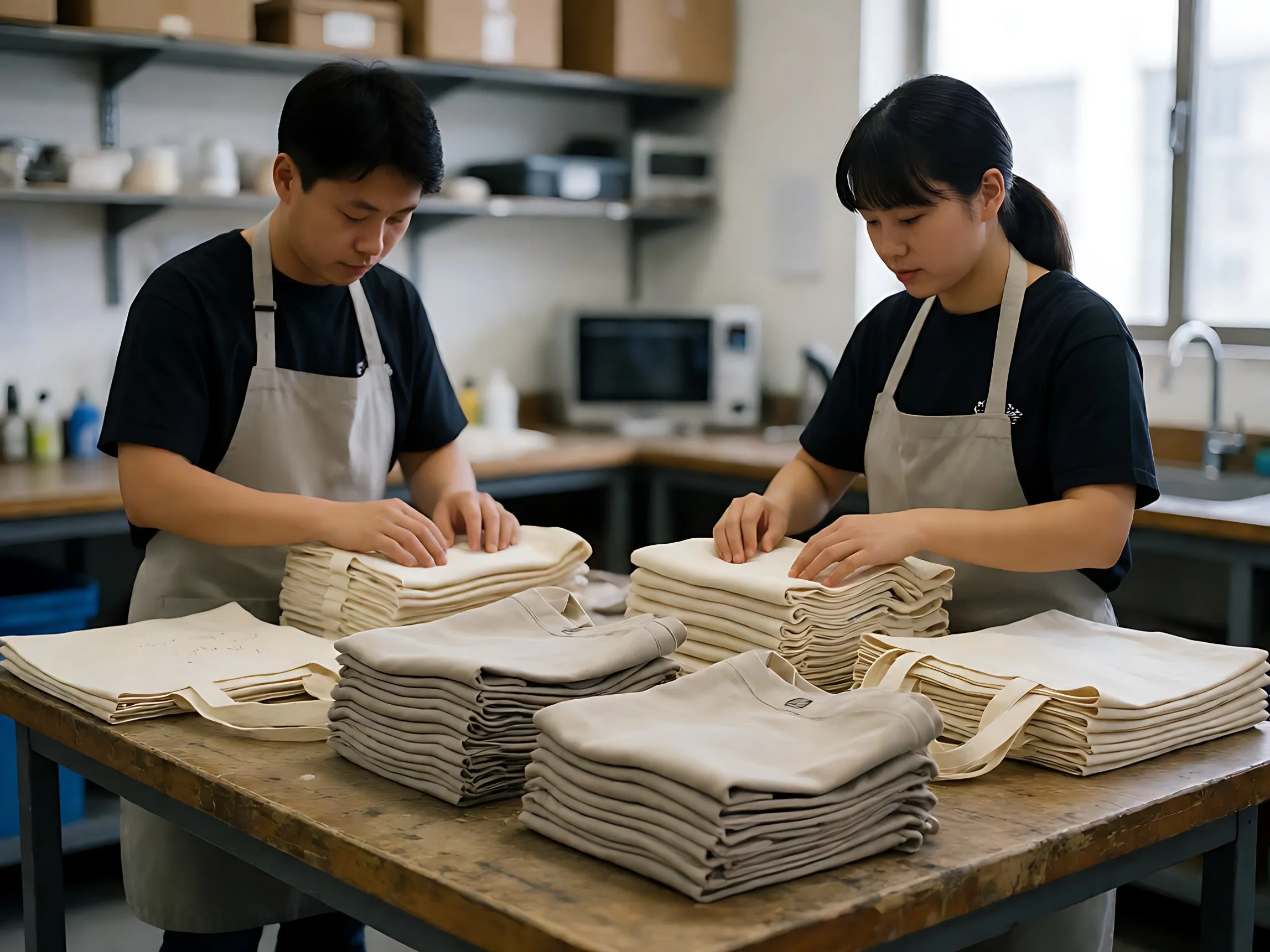
Three different jobs, three different specs:
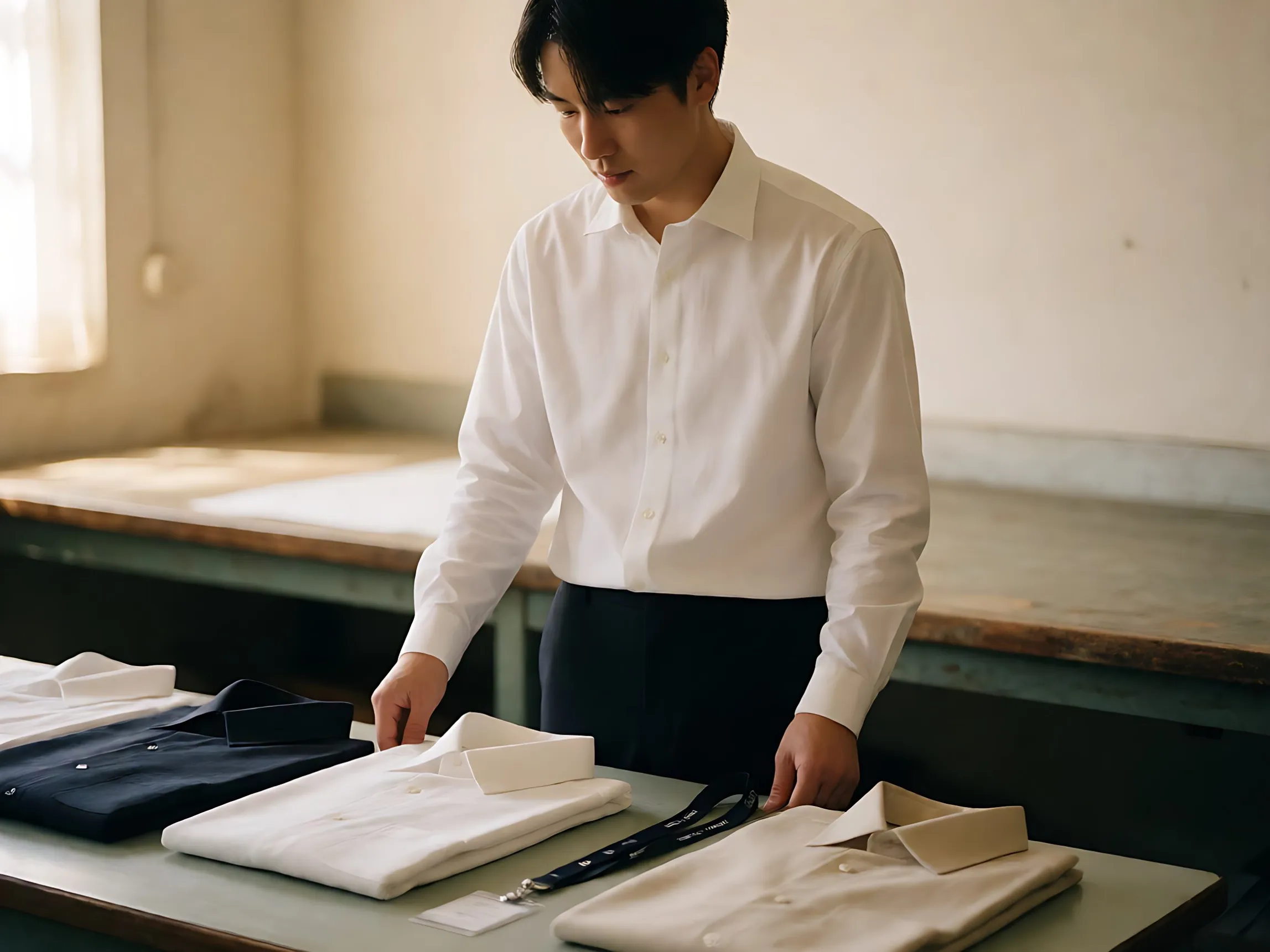
• Booth staff kit — the shirts your team wears twelve hours a day, on its feet. Comfortable fabric, clean decoration, a consistent colour that photographs against the stand. Small team, so every body gets fitted properly —
staff size breakdowns
at miniature scale.• Giveaway tees — volume buys attention. Quantity from your lead target: [XX] shirts per day of the show as a working figure, in a size curve skewed large, in a design people will actually wear after the event — your logo walking around a city beats your logo folded in a drawer.
• Demo and VIP stock — the premium piece for real conversations: heavier fabric, embroidered mark, limited run. Hundreds of cheap shirts make noise; a good garment in the right hands makes a client.
Take away: split the budget by job, not evenly — the staff kit photographs all day, the giveaway travels for months, the demo piece closes conversations.
When is rush production worth it — and what does it cost?
When the chain has already slipped, rush production is a purchase, not a failure. It typically carries a premium of [XX] and buys back a production window — but understand the trade: rush compresses sampling most of all, and the approval sample is precisely the checkpoint that prevents a wrong colour or mis-sized print shipping to the show. Rushing a small, critical staff kit with a same-week sample is rational; rushing a thousand giveaways with no sample is gambling with your booth.
The honest ledger: rush premium, expedited freight, and the
unit price
impact of smaller quantity breaks — a rushed order is usually also a smaller one. Price all three before choosing rescue over renegotiation.True or false
✔ True: rush the irreplaceable, ship the rest later. A booth team in correct shirts with giveaways arriving at the office on Monday is a recovered show; a full order arriving Wednesday is not.
✘ False: skipping the sample is the fastest way to save a slipped schedule. Skipping approval removes the one checkpoint that catches wrong colour and mis-sized prints — the failures a show cannot absorb.
What rescues a slipping timeline?
Three rescues, in order of cost:
1. Split the shipment. Staff kit flies, giveaways ship ground to the office or the next event. Most shows are saved by this one decision.
2. Reduce the spec, not the date. Fewer designs, one garment colour, no personalisation — every cut shortens the chain by days.
3. Print at destination. For domestic shows, blank garments shipped early and decorated locally rescues dates no other option can — at a unit cost you will accept gratefully.
And one pre-decision: know your cut-off date — the last day cancelling beats rushing. After it, you are buying outcomes, not garments.
Take away: choose the rescue while the calendar still offers all three. The option set shrinks by the day, and the cheapest rescue is always the earliest one you commit to.
The show-ready checklist
Run this the day the show is confirmed:
1. Booth date written at the top of a page; the full chain dated backwards from it.
2. Staff kit specified, sized from a proper count — not estimated.
3. Giveaway quantity set from a lead target, in a wearable design.
4. Approval sample in the plan with a revision round included.
5. Freight mode chosen with customs lead time if crossing a border.
6. Buffer week held — and defended when design wants it back.
7. Cut-off date for the rush-versus-cancel decision circled.
Take away: one page, seven lines, dates that other people have seen. Shows are won by the exhibitors whose checklist survived contact with the deadline.
Frequently Asked Questions
How early should trade show shirts be ordered?
Work the chain backwards and let it answer: with production of [XX] weeks, sampling with a revision round, and freight — most exhibitors need to release artwork [XX] weeks before the show. If that date has passed, start the contingency conversation now.
Can we rush an order a week before the show?
Small, critical runs — the staff kit — can be rushed at a premium of [XX], with the sample compressed rather than skipped. Large giveaway volumes in a week are a gamble; the split-shipment route gets the team dressed and the volume to the office afterwards.
How many extra shirts should we bring?
Above the staff count, a small size buffer and a handful of spares for demo guests and mishaps — [XX] pieces. Giveaways should be planned by day of show, not by spare boxes.
Ordering against a fixed show date?
Request a Quote
— the chain dated backwards from booth day, quoted stage by stage. Or browse the product range
for the staff kit and giveaways.FACTS