Oct 13, 2026Quality & Compliance
Shade Bands and Dye-Lot Control in Bulk Apparel
Why one bulk lot can hold several shades. How to agree a shade band, record dye-lot numbers, and stop panels and sets from being cut from different lots.
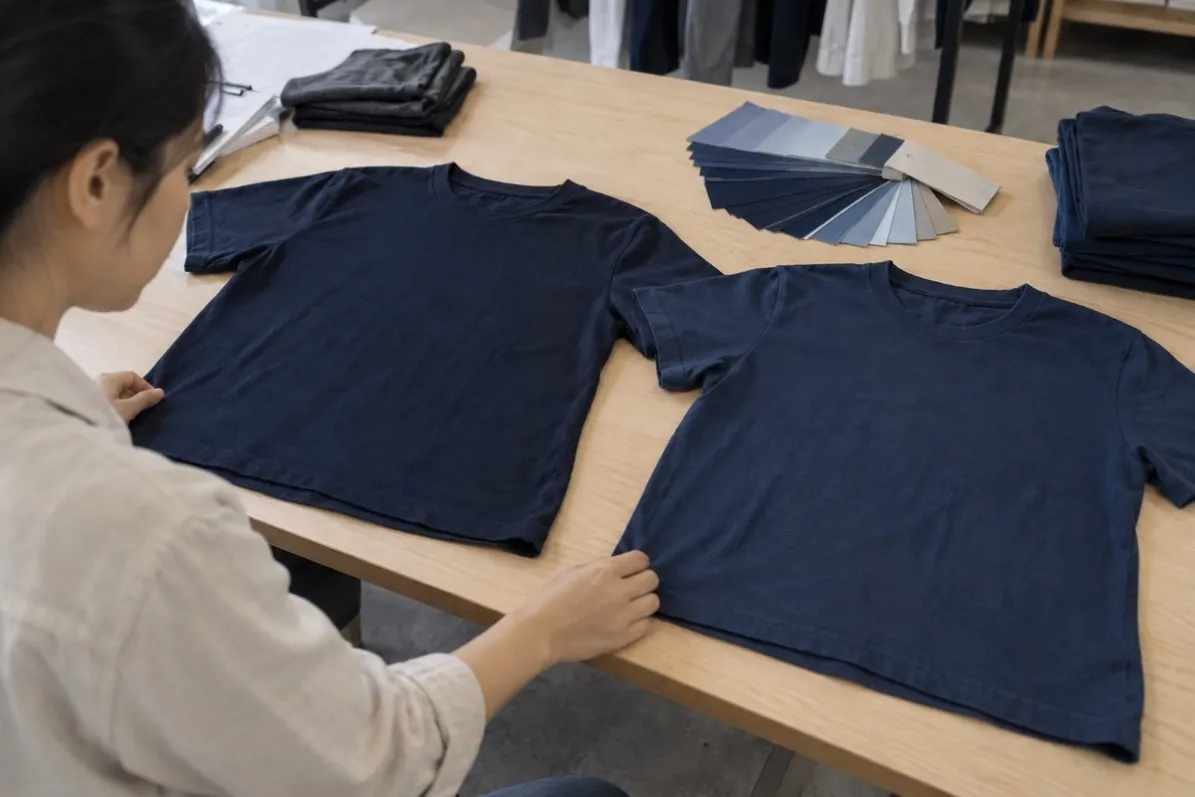
The confirmation sample matched perfectly. The bulk order arrived, and the front panel and the sleeve read as two different colours — the supplier says both are within tolerance, and both are right, because nobody ever agreed what the tolerance was, or showed a shade band, or said which dye lots could sit next to each other.
Dye variation inside a single bulk order is normal chemistry. Unmanaged, it becomes the dispute where both parties are technically correct and the uniforms are still unwearable next to each other. This article covers where the variation comes from, the shade-band approval that ends the argument, how dye-lot records keep panels and sets consistent, and what to write into the order.
Cross-order colour consistency (does reorder two match order one) is covered in Pantone matching and colour tolerance and the reorder consistency guide; this article stays inside one production lot.
Table of contents
1. One Dye Lot Is Never One Colour: Where the Variation Comes From
2. What a Shade Band Is, and Who Signs It
3. How to Choose: Exact Match or Commercially Coordinated Match
4. Light Sources: Why a Lot That Matches in Daylight Fails Under Store Light
5. When to Use Roll Segregation: Panels, Sets and Matching Tops and Bottoms
6. What to Get in Writing: Dye-Lot Numbers, Roll Numbers and the Cutting Rule
7. Cost Impact: Re-Dyeing, Re-Cutting and the Price of Sorting After Delivery
Frequently Asked Questions
1. One Dye Lot Is Never One Colour: Where the Variation Comes From
Dyeing is batch chemistry, and batches drift:
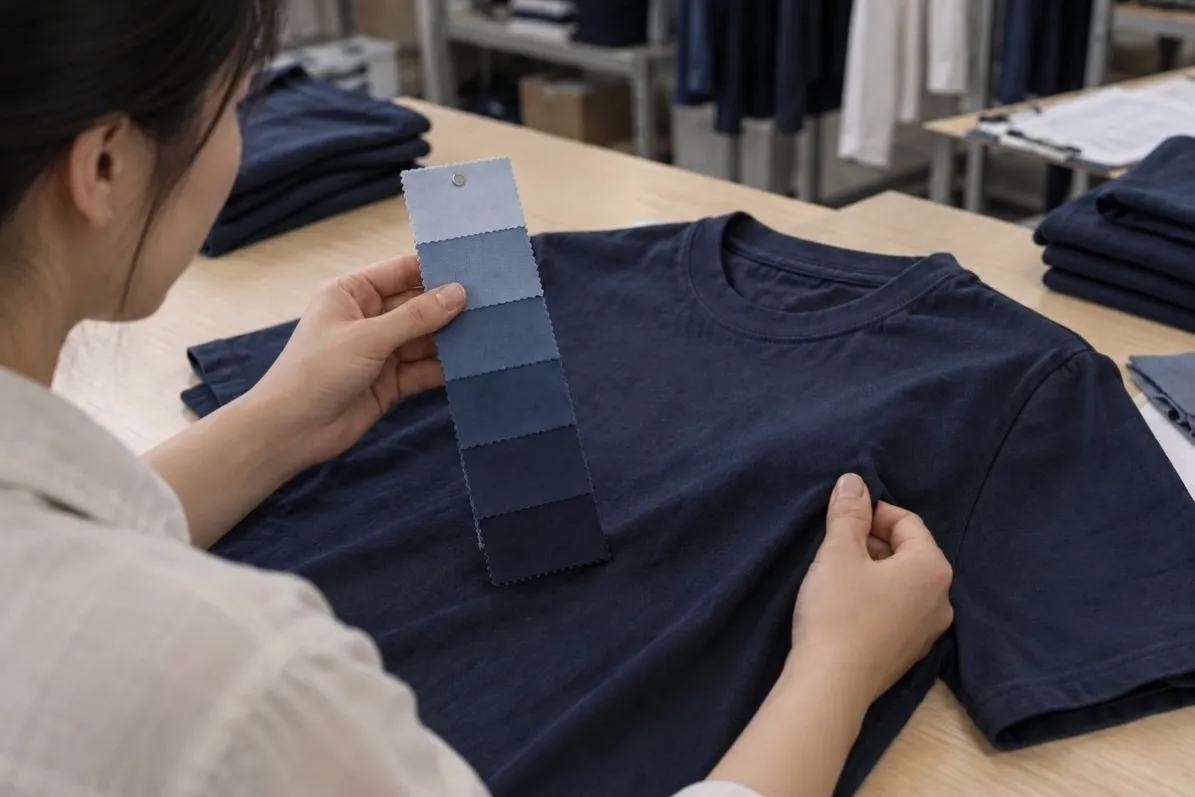
• Dye lots vary within tolerance — two batches of the "same" colour sit near each other on a scale, not on a point. Each lot is legitimate; the gap between two legitimate lots is where disputes live.
• Garments compound it — a shirt's body and its sleeves may be cut from different rolls, potentially different lots; a "solid navy" garment can hold two subtly different navies in one piece.
• Sets multiply the surface — tops ordered with bottoms, or uniforms issued across departments, put more lot-combinations side by side, each combination a fresh chance to disagree.
How to choose: accept that variation exists; the entire discipline below is about deciding which variations may stand next to each other — before cutting, not after delivery.
Tip: the shade band replaces the phrase "within tolerance". With a signed band, tolerance becomes this physical strip — and a strip does not have opinions.
2. What a Shade Band Is, and Who Signs It
The shade band is the industry's answer to colour drift, and it is simple: a set of swatches cut from the actual production fabric, spanning the acceptable shade range, approved in writing before cutting starts.
• Who approves: the buyer — or the buyer's representative — signs the band; the supplier keeps one part, the buyer the other. A band submitted without approval is a supplier's opinion, not a standard.
• What it replaces: the phrase "within tolerance" — which is where the opening dispute came from. With a signed band, "within tolerance" means "within this physical strip", and the strip does not have opinions.
• When it happens: after lab dips, before bulk cutting — the window where a shade problem costs a dye adjustment instead of a shipment.
How to choose: require the shade band for any order where colour consistency matters across panels, sets or reorders. For one-colour giveaway runs it may be overhead; for a uniform programme it is the cheapest insurance in the order.
3. How to Choose: Exact Match or Commercially Coordinated Match
Not every programme needs the same colour strictness, and the two standards price differently:
• Exact match (tight shade band) — every roll within a narrow distance of the approved standard, agreed by a measurable tolerance (a ΔE figure under the agreed light source is the common professional framing — the specific value and standard belong to your PO or third-party spec). Costs more in sorting, re-dyeing and rejected rolls.
• Commercially coordinated match — shades within a broader acceptable range, with the supplier obligated to segregate lots: same lot per garment, matching lots per shipment. Cheaper, and correct for most single-garment programmes.
• The choice is per programme, not per industry — hospitality sets and matched tops-and-bottoms push toward coordination; giveaways tolerate the wider band.
How to choose: price both standards at quote stage. The delta tells you what coordination really costs on your fabric — and for most programmes, lot segregation at a coordinated standard is the sweet spot.
Note: colour that matches in daylight can split under store light (metamerism). Name the light source in the colour clause and approve the band under it.
4. Light Sources: Why a Lot That Matches in Daylight Fails Under Store Light
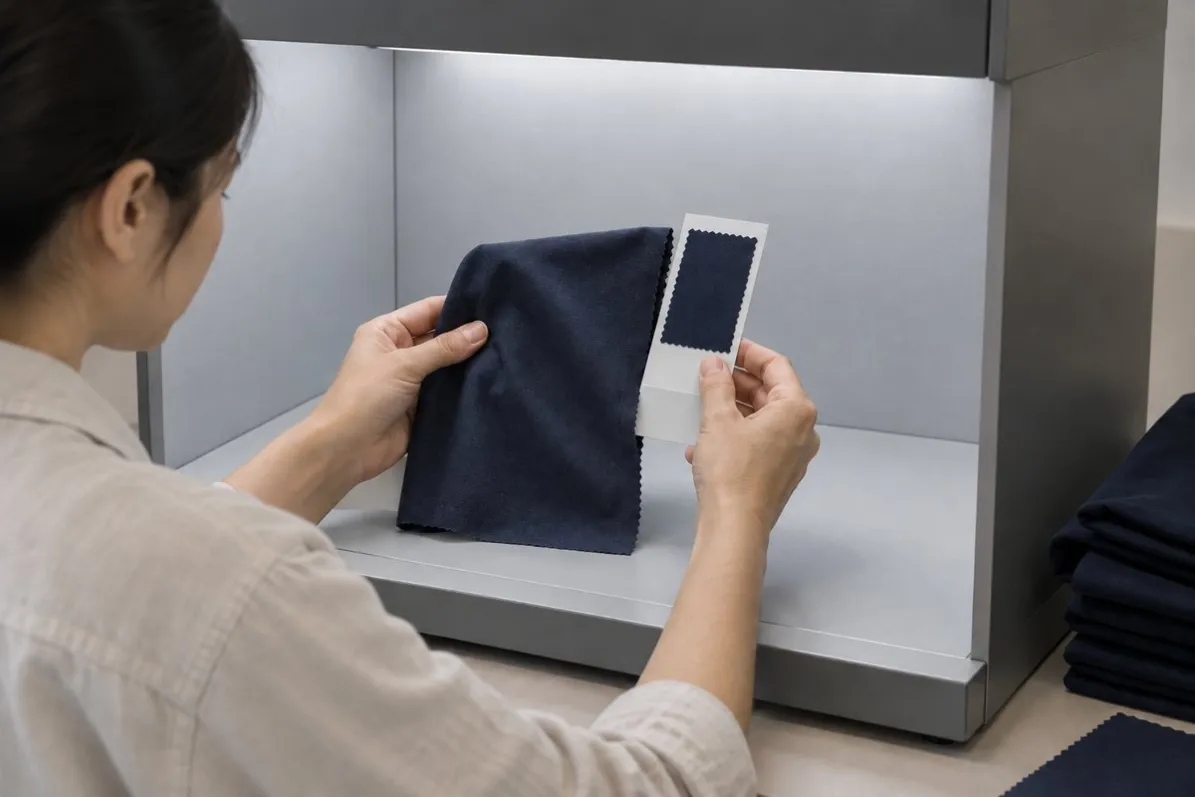
Colour that matches under one light and splits under another is a real, named phenomenon — metamerism — and it is the reason professionals never approve shade in whatever light is handy:
• Standard light sources exist for this: daylight-equivalent (D65), store/retail lighting (TL84-class) and warm incandescent (A) are the common reference cabinets — the specific source or cabinet is a spec decision agreed with your standard, not a universal — name it in your PO.
• Approve the band under the sources your garments will actually live in: a uniform checked only in daylight can fall apart under the restaurant's warm lighting that its wearers work in every night.
• The discipline is the same either way: both parties evaluate under the *named* source, or the approval is not comparable.
How to choose: name the light source in the colour clause, and approve the band under it. Ten seconds of specification replaces the most confusing category of colour dispute there is.
5. When to Use Roll Segregation: Panels, Sets and Matching Tops and Bottoms
The cutting room is where colour consistency is won or lost, and three controls do the work:
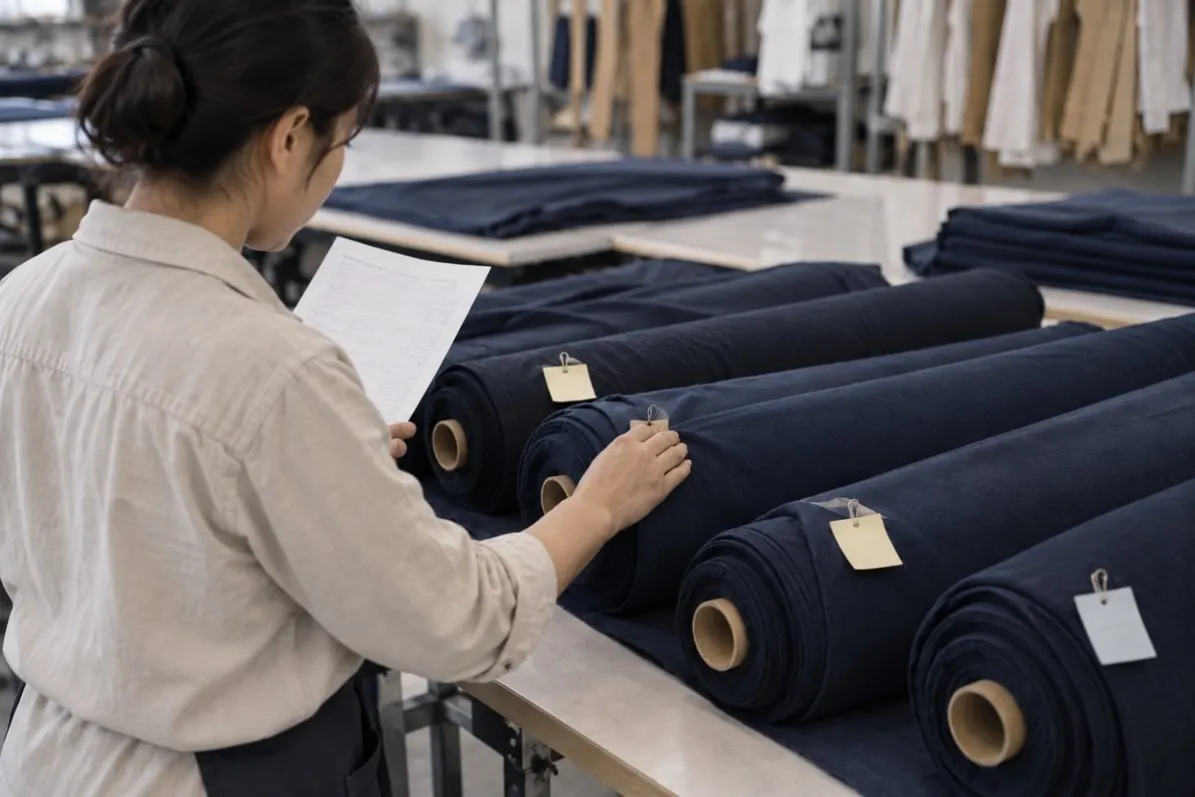
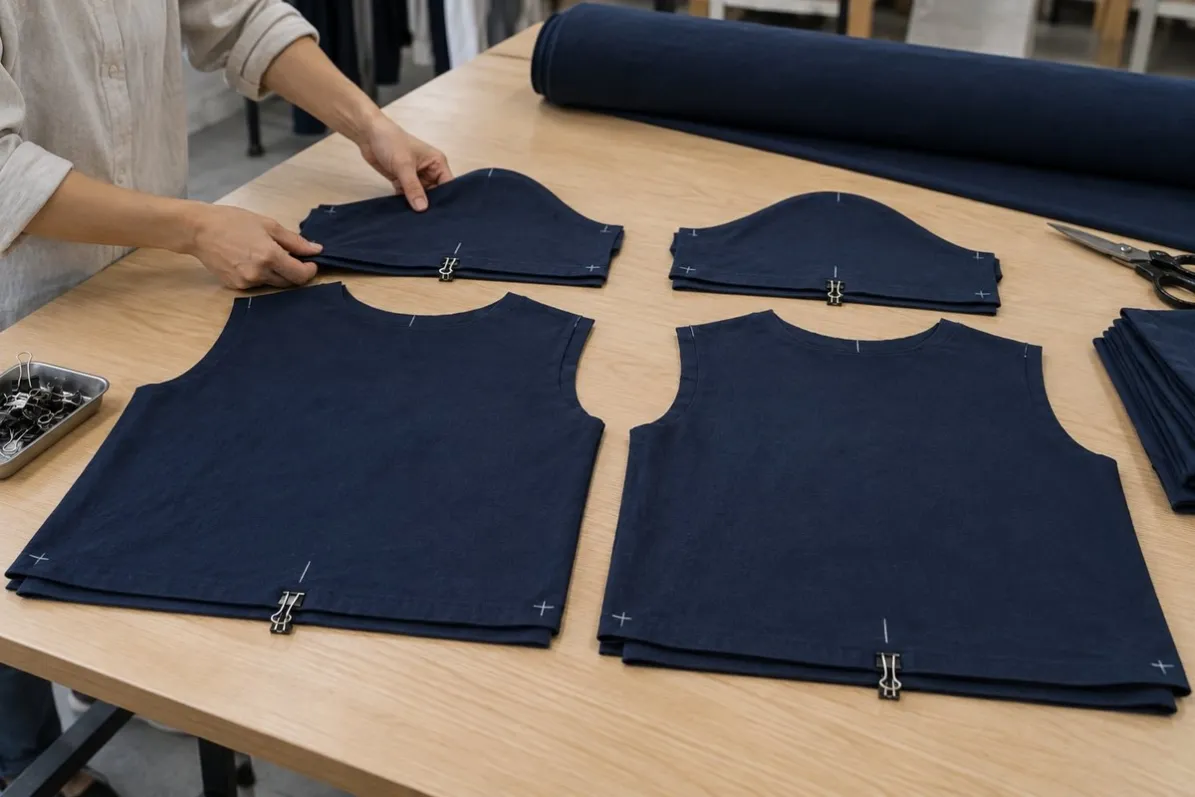
1. Same roll per garment — the body and sleeves of one shirt should come from one roll (one lot); this single rule eliminates the two-shade shirt entirely, at modest planning cost.
2. Same lot per shipment — rolls from a single lot cut into one delivery; the lot numbers are recorded from fabric to cutting ticket to carton.
3. Sets cut from matched lots — tops and bottoms intended to be worn together are cut from lots approved to sit beside each other — the coordination standard from above, applied at the cutting ticket.
How to choose: write the segregation rule into the order — "one roll per garment; lot numbers recorded to carton; sets cut from matched lots." It is a cutting-room instruction, not a hope.
6. What to Get in Writing: Dye-Lot Numbers, Roll Numbers and the Cutting Rule
The paper trail that makes all of the above enforceable:
• Lab dip approved (the pre-cursor to the band, at the dye stage).
• Shade band signed by both parties, referenced in the PO.
• Lot and roll numbers recorded to the cutting tickets and the packing list — so any later question can be traced from carton to lot.
• The out-of-band procedure — what happens to a roll that misses the band: re-dye, sort out, or reject, and at whose cost, written into your PO.
How to choose: these four items are one paragraph in the PO. The paragraph is what converts "within tolerance" from an opinion into a document.
7. Cost Impact: Re-Dyeing, Re-Cutting and the Price of Sorting After Delivery
The economics of colour control, honestly stated:
• Tighter bands cost more upfront — sorting, roll rejection and re-dyeing are real supplier costs, and they price into the coordinated standard.
• Unmanaged drift costs more later — a shipment that arrives mismatched faces re-dyeing at scale, sorting labour, delayed issue — or acceptance, which converts into complaints for the programme's whole life.
• The asymmetry favours the band — a shade-band approval and lot segregation cost minutes and a small premium at the right stage; the same control attempted after delivery is a claim, with the burden of proof and the calendar against it.
How to choose: buy the colour discipline at the dye stage, where it is cheap. Everything after cutting is a refund conversation wearing a lab coat.
Wrapping up: agree the band, record the lots, cut by the rule
Colour variation inside a bulk order is chemistry, not negligence — but the dispute it causes is entirely preventable. Sign the shade band before cutting, name the light source you approve under, keep dye-lot and roll numbers on the paper trail, and write the one-roll-per-garment rule into the cutting ticket. That paragraph of specification is what turns "within tolerance" from an argument into a document.
Frequently Asked Questions
What is a shade band in garment production?
A set of swatches from the actual production fabric spanning the acceptable shade range, signed by both parties before cutting. It replaces "within tolerance" — an opinion — with a physical standard both sides hold.
Why do panels of the same garment look like different colours?
Body and sleeves cut from different rolls — potentially different dye lots — each within their own tolerance, visibly different side by side. The one-roll-per-garment cutting rule eliminates it entirely.
How much colour variation is acceptable in bulk apparel?
Whatever your signed shade band says — agreed as a measurable tolerance (a ΔE figure under the named source is the professional framing) or as a commercially coordinated range. Without an agreed band, "acceptable" is decided by whoever is angrier.
What light source should I use to check fabric colour?
The one named in your colour clause — professionally, a standard cabinet source (daylight-equivalent, retail and warm references are the common set), chosen for where the garments will actually live. The same lot under different sources can disagree; the named source makes approvals comparable.
Can different dye lots be mixed in one order?
Within an agreed band, yes; beyond it, no — and sets or matched pieces should come from matched lots regardless. The cutting rule (one roll per garment, lot numbers to carton) is what makes mixing decisions deliberate.
How do I make sure a top and bottom set match?
Approve the shade band for both garments, and require sets to be cut from lots approved to coordinate — recorded at the cutting ticket. Matching is a cutting-room instruction; assumed at delivery, it is a coin flip.
Who approves the shade band before cutting?
The buyer, or the buyer's representative — signing the band and keeping their part of it. A band the supplier approved alone is the supplier's standard, which is the dispute the band exists to prevent.
What happens if bulk fabric falls outside the approved shade band?
Whatever the PO's out-of-band procedure says: re-dye, sort and segregate, or reject — at supplier cost for misses against the signed band, per your PO. Without the band and the clause, out-of-bulk-shade fabric is, once again, everyone's opinion.
Setting a colour standard before cutting?
Request a Quote — lab dips, shade bands and lot-segregation rules agreed at order stage, so the colour standard is set before the fabric is cut. Or start the colour system at custom workwear.