Oct 3, 2026
School Spirit Wear: Ordering Around the Academic Calendar
Spirit week, term start and graduation don't move for your order. Learn the four ordering windows in a school year and how to collect sizes and names across a student body.
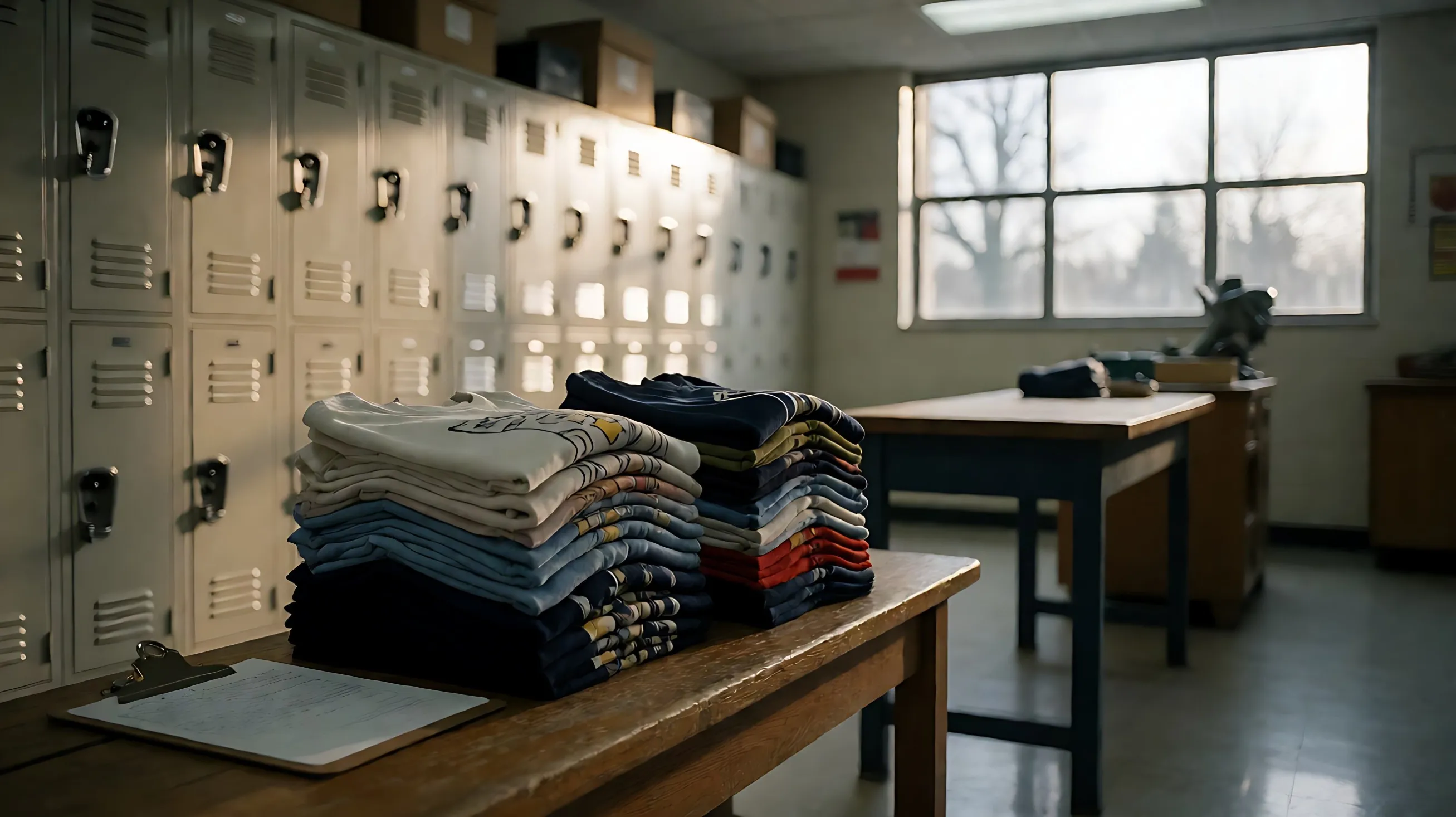
Short answer: fix the design and quantity before the term starts, collect orders in the first two weeks, and freeze the roster in time for production to finish before the first spirit day. Spirit wear dies on the calendar, not on the printing press. The event is fixed months in advance, every school in the region hits the same weeks, and an order that misses spirit week cannot be re-run — the money is spent on garments that arrive after the moment they were for. The good news: a school year is the most predictable demand curve in custom apparel. Four windows, each with its own order-by logic.

Why do spirit wear deadlines follow the academic calendar?
Schools order in waves, and the waves collide. Term start, homecoming and spirit week, graduation — the same fixed dates for every school in a city, so production capacity compresses in the weeks before them. Lead times that feel comfortable in a quiet month stretch when every PTA, booster club and graduating class orders at once.
The calendar flips by region, which matters for international schools and cross-border programmes: North American and most Southeast Asian international schools run August to June; much of South America runs February to November, with its own graduation crunch in the closing months. Whatever your hemisphere, the planning rule is identical: identify your region's crunch weeks, then order before them, never into them.
Take away: put the four peak dates on your calendar first — first day of term, spirit week or homecoming, graduation, any mid-year festival — and plan every order backwards from those dates.
What are the four ordering windows?
Term start (August–September, or February–March in southern-hemisphere calendars). The biggest volume window: new families, new teachers, fresh stock for the school shop. Order before the previous term ends or in the first week of the holiday — a hoodie that lands in week three has missed half its demand.
Spirit week and homecoming. The highest-risk window: fixed dates, peak demand, often discovered late by the organising committee. Fix the design and quantity estimate before the term starts, collect orders in the first two weeks with a hard roster deadline, and leave production and delivery the weeks that remain. The general method is the
backwards lead-time timeline
; spirit week simply compresses every stage.Graduation (May–June, or November–December in southern calendars). Keepsakes with names and years — which makes the roster the critical path, not the printing. Freeze the graduate list early (schools know it far earlier than they act on it) and expect a surge of "can we add one more" requests needing a contingency of [XX] pieces.
Summer programmes and camps. The quiet window and the best pricing of the year (in southern-hemisphere calendars it sits in the December–January break): capacity is free, and orders placed now can pre-stock term start at calmer prices.
True or false
✔ True: windows closer than [XX] weeks away, with the design not yet agreed, are rush decisions. They need the contingency options below, not a pretence that the standard timeline still applies.
✘ False: ordering "when we have all the names" is the safe way. Collecting first and ordering after is how the garments arrive after the week — the roster freeze must serve the production window, not the other way round.
How do you collect sizes and names across a student body?
A school order is two collections at once — sizes and personalisation — and both fail the same way: late, incomplete, or changed after submission.
For sizes, full fitting panels do not scale to three hundred students. The practical version: publish the measured size chart from a sample set (the discipline in
size tolerance and staff breakdowns
still applies — one measured sample beats any nominal chart), let families size themselves against it, and hold a fitting morning for the outliers. For names, years and numbers, use one roster file with a named owner and a published freeze date — the format and proofing rules in the personalised order proofing checklist
were written for exactly this.Take away: set the roster deadline by the calendar, not by politeness — late names become next-term orders. And collect payment with the order form; nothing focusses a family on their size choice like paying for it.

What is the budget reality for school groups?
School groups feel every unit price, and the maths has three moving parts. Quantity breaks reward bigger orders — but a class of forty does not need to chase the hundred-piece tier with speculative sizes. Spares for mid-year joiners and "mine shrank in the wash" claims deserve a deliberate buffer of [XX] pieces in the core sizes. And leftovers tie up PTA money in a cupboard; sell-through beats stockpiling for a discount you cannot bank.
Take away: order the real roster plus a spare buffer, not the price-break fantasy quantity. The saving on a tier you did not need is smaller than the cost of boxes nobody buys.
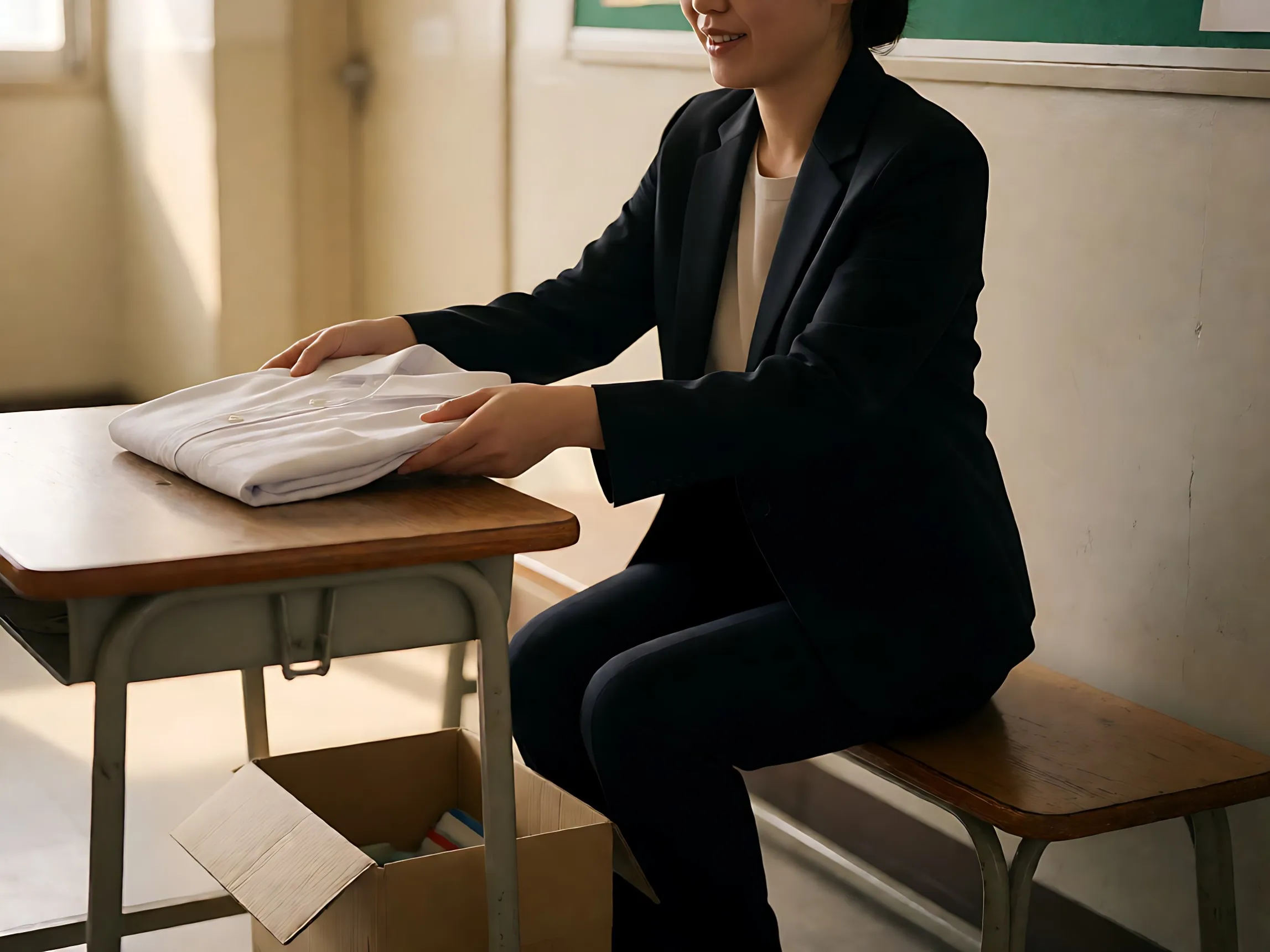

A worked timeline: ordering for an October spirit week
Backwards from distribution in the first week of October:
• Early September — design agreed with the committee; quantity estimated from last year plus a spare buffer; quote requested.
• Mid September — order forms live for two weeks maximum; roster and size counts frozen at a published date; artwork and names proofed against the roster.
• Late September — production window of [XX] weeks begins the day the roster freezes; approval sample checked and released within days, not weeks.
• First week of October — goods in, sorted by class, distributed before the first spirit day.
Take away: write the four dates on one page and get the committee to sign them. A timeline in a meeting minute survives contact with reality far better than one in somebody's head.
When things slip: late orders and mid-year joiners
Plans slip: the committee changes the design, the roster freezes late, a supplier confirms capacity the week everything is due. The rescue options, in rising order of cost — reorder the same design later at a small-batch premium of [XX]; split the order so the senior class ships first and the rest follows; or, for genuinely late names, fold them into the next window's run and say so early.
Take away: never let a late addition silently push the whole order past the date. Cut the line, tell people when the next boat is, and keep the event garmentless before you make everyone garmentless.
Frequently Asked Questions
When should we order spirit wear for spirit week?
Fix design and quantity before the term starts, collect orders in the first two weeks, and freeze the roster in time for a production window of [XX] weeks to finish before the first spirit day.
How far in advance should a school order?
For term-start volume, order in the previous term's final weeks or the first holiday week. For fixed events, work the date backwards stage by stage and add a buffer week — schools order in the same regional crunch.
What happens if sizes come in after term starts?
Demand drops, but it does not die: route latecomers to the spare buffer first, then a small top-up run of the sold-out core sizes. The mistake is sizing the buffer at zero to save the upfront cost.
Can parents order and pay individually?
Yes, and it solves collection friction and your cash exposure at once. Run order forms with payment for a fixed two-week window, then submit one consolidated order — someone still owns the tally and the deadline.
Should we order extra sizes for mid-year joiners?
A deliberate buffer in core sizes — [XX] pieces — sized by your intake history. New families buying spirit wear in week one of arriving is a tradition; the only question is whether you sell it to them or send them away.
How do we handle a reorder before graduation?
Treat it as a new order with old specs: design, sizes and shade references are already agreed, so the critical path is the updated graduate names. Freeze the final list early.
Is embroidery or print better for school crests?
Daily-worn garments and multi-year items — leavers hoodies, blazer crests — suit embroidery; large-volume event tees suit print. Crest stitch count drives its price, so simplify the artwork before quoting.
Ordering spirit wear against the calendar?
Request a Quote
— design, roster and dates agreed backwards from your event. Or browse the product range
for the class run.FACTS