Oct 3, 2026
Custom Caps in Bulk: Cap Style, Embroidery and Packing
Caps fail differently from shirts. Choose a crown that holds embroidery, set area and centring tolerance, pick sizes, and specify packing that keeps crowns from crushing.

Short answer: because a cap is a structured product, not a flat panel — crown, bill and packing each introduce failure modes a t-shirt never has. The review-section failure set for caps is its own genre: embroidery that sits crooked across the panels, lettering too small to read at arm's length, crowns crushed flat by shipping, adjustable straps that feel cheap next to the garment they accompany. None of these happen to a shirt — and all of them are preventable with specs written before bulk.
Below: crown types, the two embroidery specs that decide "cheap-looking", small text, sizing, and packing.

Structured, mid-profile or unstructured — which crown holds embroidery?
• Crown · Shape · Embroidery behaviour · When to use
• Structured · Built with buckram/fusing, holds shape off-head · Mark sits flat and centered; best registration · Corporate and team caps where the logo is the point
• Mid-profile · Semi-constructed · Good balance of shape and softness · General merchandising
• Unstructured (dad cap) · Soft, slouches without a head · Mark curves with the fabric; characterful but less precise · Lifestyle programmes where softness is the aesthetic
Take away: the more the logo matters, the more structure the crown needs. A dense mark on an unstructured crown is a registration complaint waiting for a warehouse.
Which two embroidery specs decide whether a cap looks cheap?
Area and centring. Caps embroider on curved, seamed panels — the mark must be sized to the panel's flat zone, not to the cap's total width, and centered to the crown seam rather than the bill. A workable spec names the area in centimetres (width × height, [XX] on your programme), the reference (centered to the front seam, raised [XX] cm from the bill), and a centring tolerance of ±[XX] cm. The front-panel seam is the landmark — the same logic as any
placement spec
, adapted to a curved surface.Take away: caps amplify small errors — a logo 5 mm off-center on a small, structured surface reads crooked from across the room. Write the reference and the tolerance.
Why does small text vanish on caps?
Thread has width, and caps embroider on movement-prone panels — small lettering fills in as stitch density crowds. The working rules: minimum letter height for cap embroidery is higher than flat-garment work ([XX] mm on your quote — confirm before designing); simplified wordmarks outperform exact logo reproductions; and fine-serif or thin-weight fonts should be redrawn as a dedicated cap mark. If the brand mark cannot survive at readable size, the cap gets a simplified version — that is a design decision, not a compromise.
Take away: design for the process, not against it: fewer letters, bolder forms, one clean mark.
How do cap sizes work in bulk?
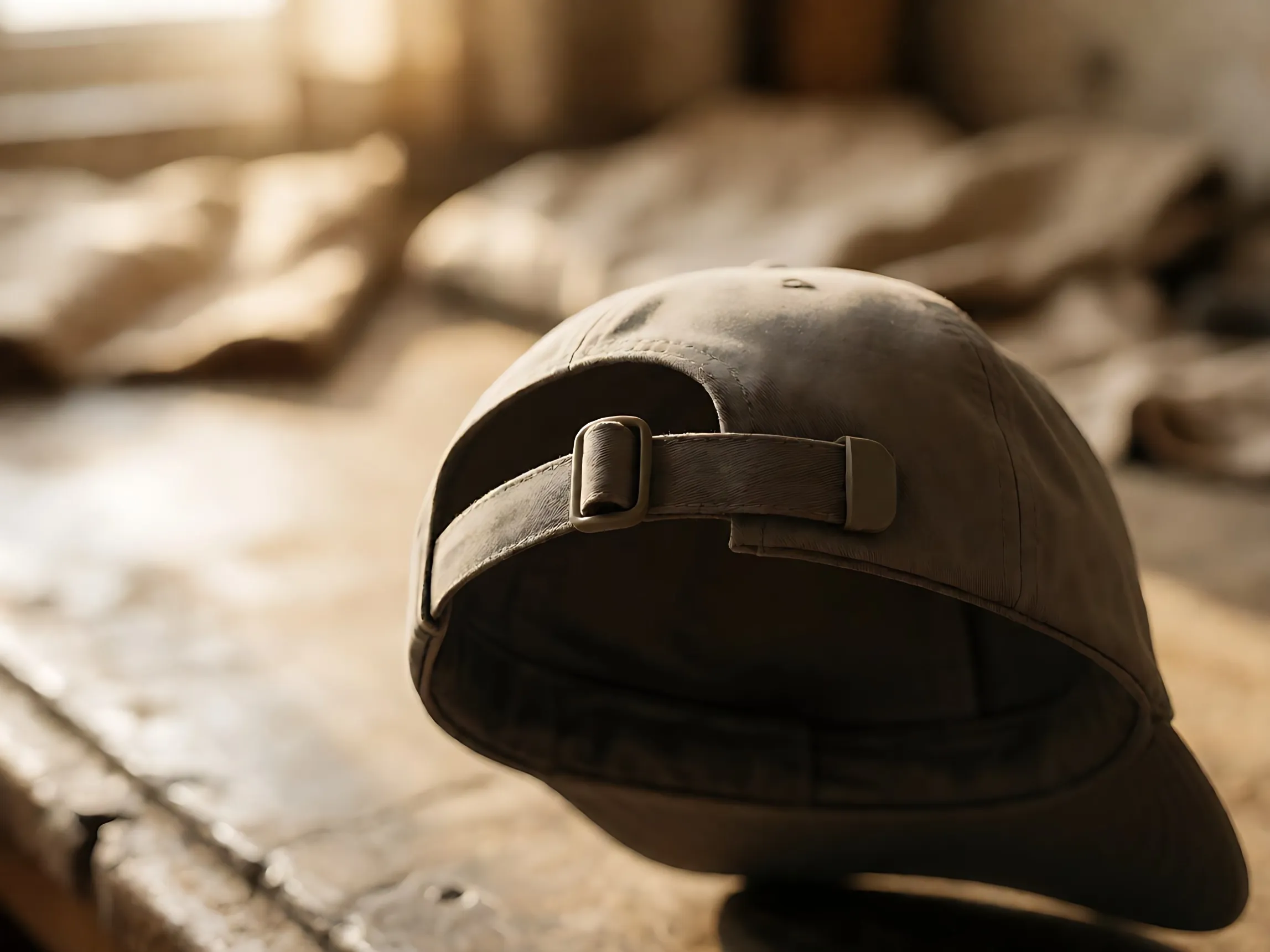
Most bulk caps run adjustable (one-size, strap or snap closure) — which collapses the sizing problem into a quality question: the closure is what the wearer touches, and cheap closures generate the "feels cheap" reviews. Fitted and flexfit sizes exist for premium programmes and add a size-curve decision (
the same breakdown logic
, smaller curve). For most uniform and merchandising uses, adjustable is the answer; specify the closure quality in the spec rather than discovering it on delivery.Take away: "one size" shifts the spec from size to closure — name the closure type and quality in writing.
How do you stop caps arriving crushed?
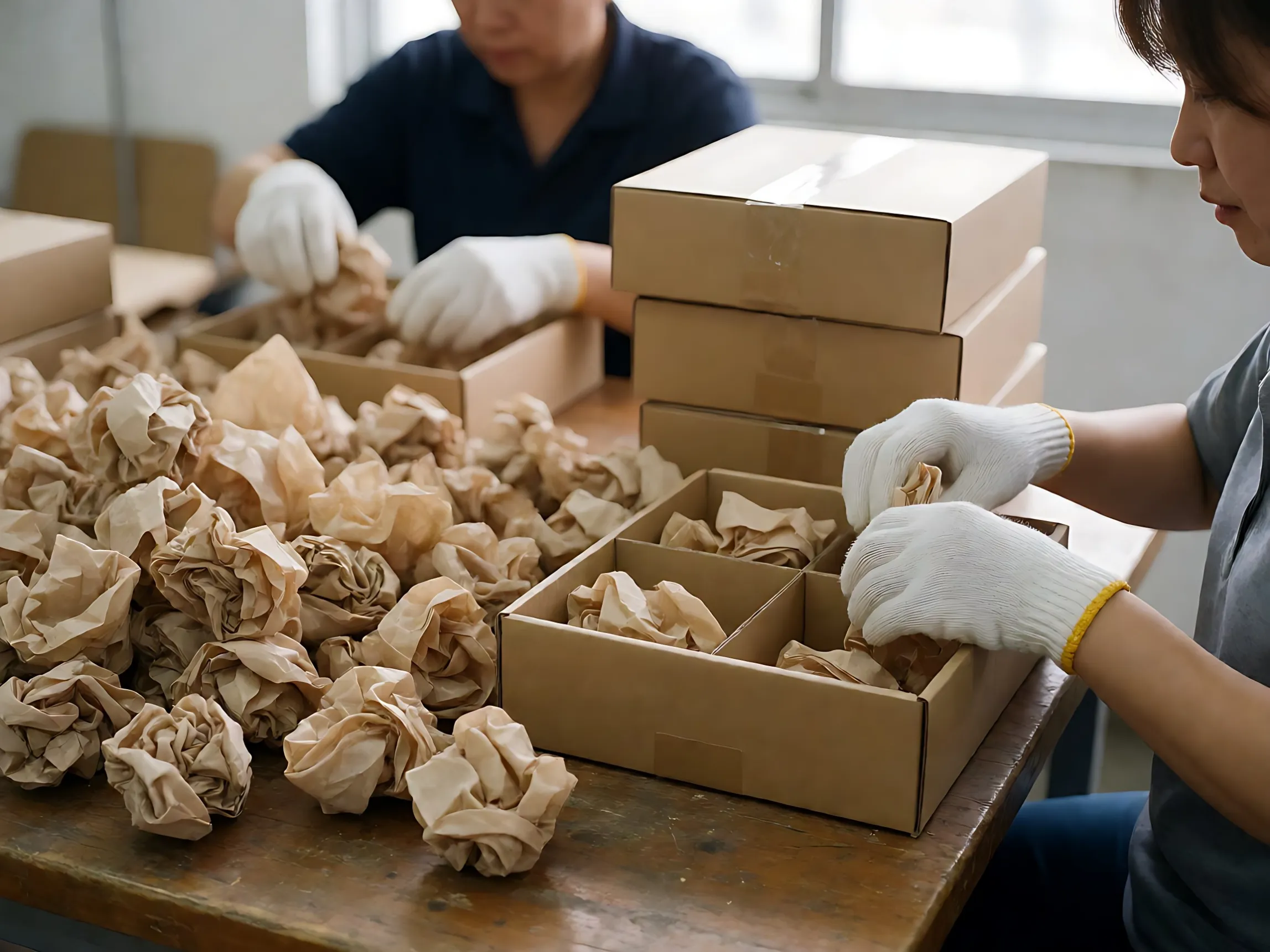
Packing is a cap spec, not logistics trivia. Caps ship stuffed and boxed to hold the crown: specify individual stuffing (tissue or form insert), inner boxes or dividers rather than loose poly mailers, and cartons stacked no deeper than the crown tolerates. A mailer bag ruins a structured crown — the embroidery survives, the shape does not, and the cap photographs like a deflated budget item. Packing costs belong on the quote as a line ([XX] per piece on your programme).
Take away: the crown is the product. If packing is not specified, it will be optimised for freight cost — which is the opposite of what you are buying.

What do caps cost compared with a shirt order?
Structure per unit is higher (panels, closure, sweatband), embroidery pricing follows stitch count as anywhere, and minimums typically sit lower per style/colour than garment minimums ([XX] — confirmed in your quote). The economic comparison that matters: a cap programme's spec list is shorter than a shirt's (no size curve, no fabric weight ladder) but each spec matters more, because there is nowhere to hide a crooked mark on a structured panel.
Take away: fewer fields, higher stakes per field. The cap order rewards the buyer who writes the placement and packing lines down.
Frequently Asked Questions
What minimum applies to custom embroidered caps?
Per style and colour, confirmed in your quote ([XX]) — typically lower than garment minimums because the size curve collapses to adjustable.
Why does my embroidery look crooked on caps?
Placement referenced to the wrong landmark (the bill instead of the crown seam), or a soft crown that moved during stitching. The spec names the reference and a centring tolerance; structured crowns hold registration best.
What cap style holds embroidery best?
Structured crowns — the built front panel keeps the mark flat and centered. Unstructured caps suit simplified marks where the soft look is the point.
Can you embroider small text on a cap?
At a higher minimum letter height than flat garments ([XX] mm on your quote). Below that, letters fill in — simplify the wordmark rather than shrinking the type.
What sizes do custom caps come in?
Adjustable one-size covers most programmes; fitted and flexfit curves exist for premium runs. "One size" moves the quality question to the closure — specify it.
How do you stop caps getting crushed in shipping?
Individual stuffing plus boxed or divided packing, with stacking depth in the spec. Loose poly mailers are how structured crowns arrive flat.
Is embroidery or printing better for caps?
Embroidery for structured, corporate and team caps — durable and dimensional. Printing suits unstructured fabric crowns and full-colour marks; the trade-offs mirror the
flat-garment method comparison
.Can I mix cap colours in one order?
Usually within the per-style minimum — colour mixes are the normal way to reach it. Confirm whether minimums count per colourway or per style, in writing.
Specifying a cap run?
Request a Quote
— crown, placement, closure and packing specified in writing, with the embroidery sized to the panel.FACTS