Oct 3, 2026
Apparel Shrinkage Tolerance: How to Specify It Before Bulk
Cotton shrinks and blends move less. Set a shrinkage limit in your spec, pick a blend that holds its size, and order from washed measurements not the size chart.
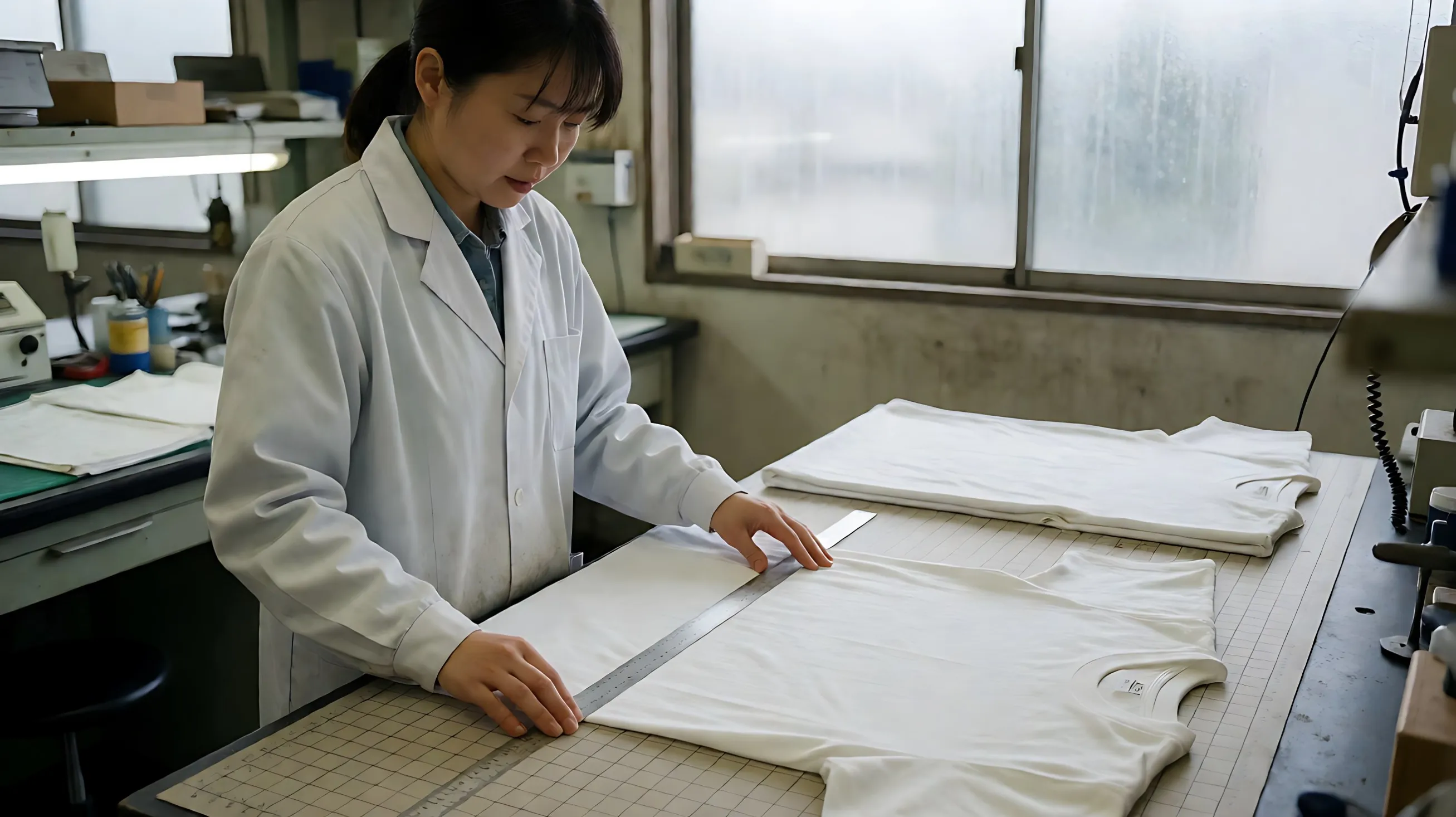
Short answer: a number you set before production, measured after one wash — not "it should be fine". Shrinkage is a material property: controllable, testable, never completely eliminable. Buyers who set a shrinkage limit in the spec, wash-test the sample and order from washed measurements rarely re-order sizes later. Buyers who skip it meet the review-section classic: the kit that fit on delivery day and shrank two sizes after the first hot wash.
Below: what drives shrinkage, what the common labels actually guarantee, and what to write into the spec.
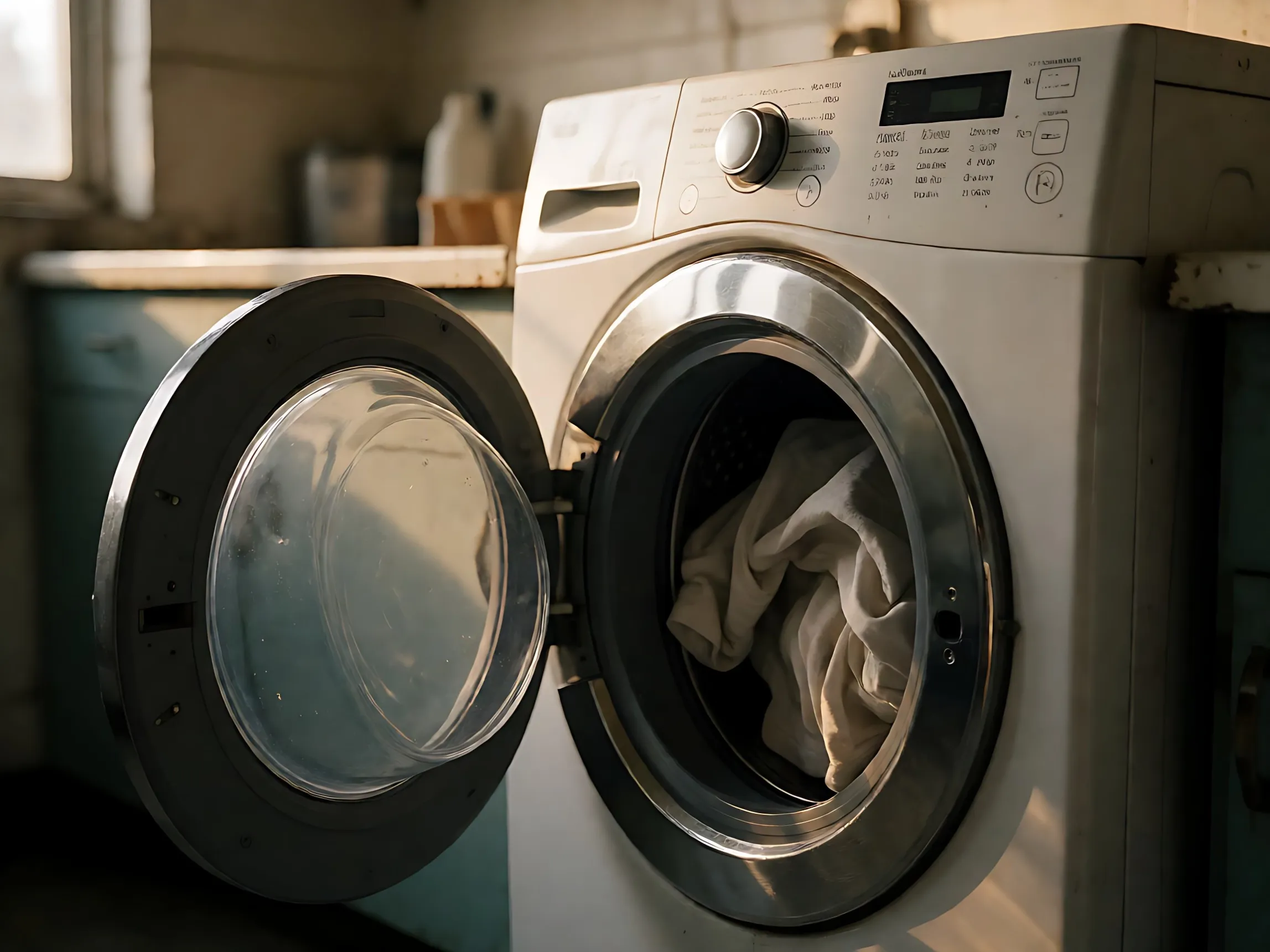
Why does the same size label fit differently after a wash?
Shrinkage happens when fabric relaxes back after the tension it was held under during knitting and finishing. Three variables decide how far it moves:
• Variable · Effect · Spec lever
• Fibre content · Cotton moves most; polyester barely; blends in between · Choose the blend for the wash regime
• Knit tension · Looser knits relax more than compact ones · State knit type, not just weight
• Finishing · Pre-shrunk and garment-washed fabrics have already done most of their moving · Name the finish in the spec
True or false
✔ True: a garment can be perfectly to spec before washing and still shrink — unless the spec says how much. Shrinkage tolerance is a band you agree, like placement or colour, not a defect you discover.
✘ False: "pre-shrunk" means it will not shrink at all. It means the fabric was pre-exposed to the shrinkage it would naturally undergo — most of the movement is gone, not all of it. The residual amount still belongs in your spec.
How much shrinkage is normal?
There is no universal figure — there is the figure you accept. A workable spec states a maximum per direction (length and width shrink independently), confirmed on your own sample: [XX] length, [XX] width for this programme. The test method belongs next to the number — a standard wash cycle, [XX] cycles, measured flat — because "shrinkage" measured after a cold hand wash and after a hot industrial cycle are different data points.
Take away: a shrinkage limit is like a tolerance band: it converts "it shrank" from a complaint into a measurement. Without it, both sides are right.
Which blends hold their size best?
• 100% cotton — the most movement, especially in hot wash-and-dry cycles; the trade for hand-feel and breathability.
• Combed cotton — same fibre behaviour as any cotton; combing improves surface, not shrinkage.
• CVC (cotton-rich poly blend) — meaningfully less movement than pure cotton while keeping most of the cotton hand; the common uniform compromise.
• Performance polyester — dimensionally stable; the choice where the wash regime is harsh or the fit is critical (the same logic as
fabric in humid climates
).Take away: blend choice is shrinkage strategy. A uniform programme with daily hot laundering leans poly or CVC not for price but for dimensional stability.

What do "pre-shrunk", "sanforised" and "garment-washed" actually guarantee?
• Pre-shrunk — the fabric has been through a shrinkage process before cutting; residual shrinkage is reduced, and the residual number is what your spec should capture.
• Sanforised — a specific mechanical pre-shrinking standard for woven cotton fabrics; a controlled process with a defined residual range, commonly quoted for shirting.
• Garment-washed — the finished garment was washed before shipping: softness and minimal further shrinkage, plus a slight vintage hand; each wash adds cost ([XX] per piece on your quote) and slightly relaxes the size.
Take away: all three reduce the unknown; none remove the spec. Ask which process was used and what residual shrinkage it leaves — a maker who knows their numbers has measured their operation.
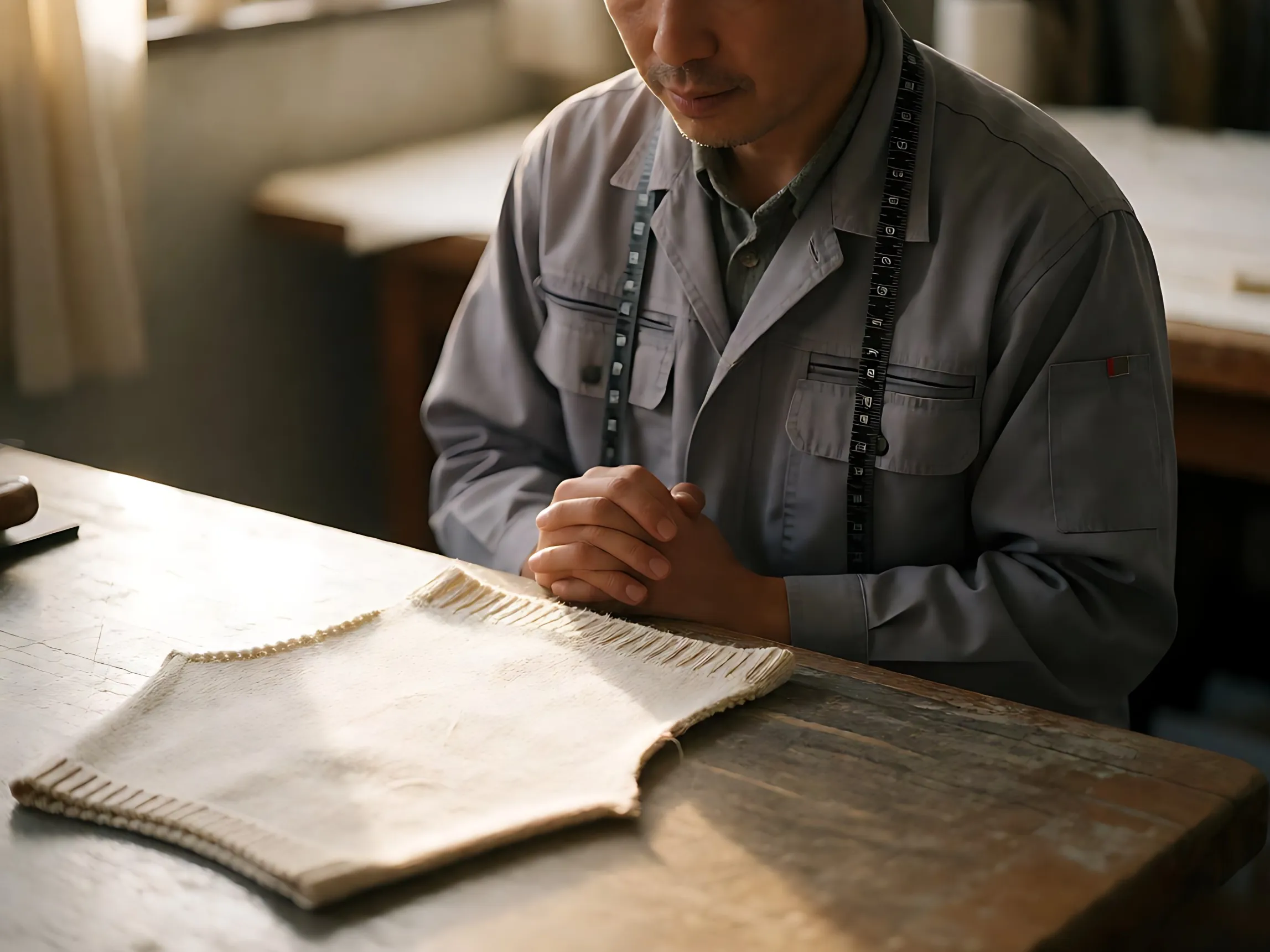
Should you order from washed measurements?
Yes, once the order matters. The professional sequence: measure the sample flat, wash it once through the real regime, measure again, and build the size break from the washed dimensions. Ordering from the unwashed chart is how a programme ships true to label and lands short. The
size tolerance and breakdown method
plugs straight in — washed measurements make its bands honest.Take away: the chart describes intent; the washed garment describes delivery. Order on the second one.
What goes into the spec — exactly?
Three lines, beside the
fabric spec block
:1. Shrinkage limit: max [XX], length and width separately, after one standard wash cycle.
2. Test method: the cycle and the measurement convention, named — "measured flat after [XX] cycles at [temperature]" beats "normal wash".
3. Verification: wash test on the pre-production sample, results filed with the spec so reorders are held to the same numbers.
Take away: shrinkage limits cost nothing to write and are checkable at inspection under the same clause pattern as your
AQL terms
.Why does shrinkage hurt more in hot and humid markets?
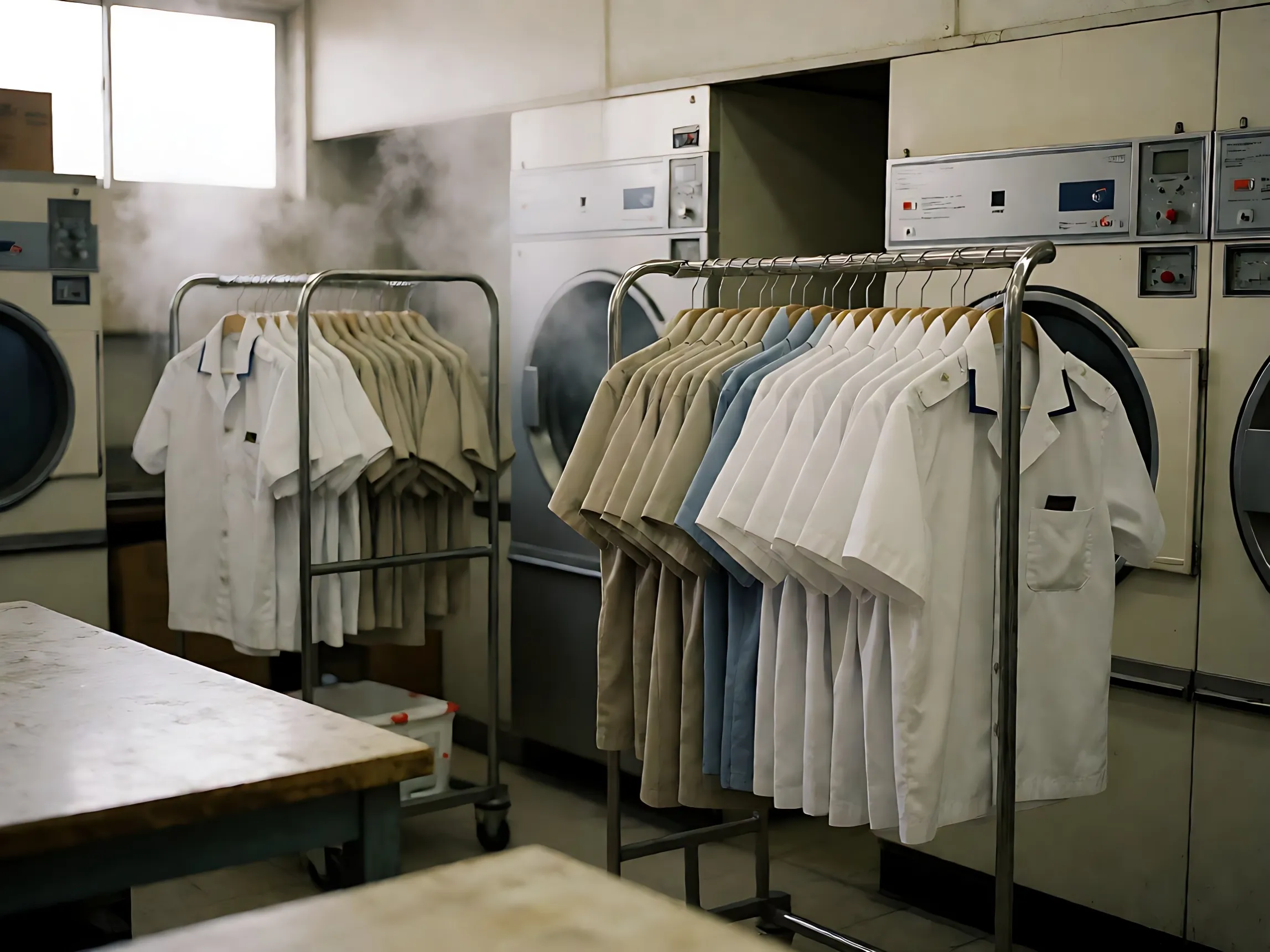
Tropical programmes launder hot, wash frequently and often line-dry in humidity — each cycle is a shrinkage event, and uniform sizing has to survive dozens of them per season. Polyester and CVC blends earn their place here; pure cotton programmes in these markets should budget both the tighter shrinkage spec and the spare-ratio consequences.
Take away: in Southeast Asia and coastal Latin America, shrinkage is a weekly event, not a one-time test. Spec for the fiftieth wash, not the first.
Frequently Asked Questions
How much do custom t-shirts shrink after washing?
Depends on fibre and wash regime: cotton moves most, poly blends far less. The number that matters is the one in your spec — measured on your sample after your wash cycle — not a general average.
What is an acceptable shrinkage percentage for bulk apparel?
Whatever you write into the spec as a maximum, per direction, with the test method named. Values used across the industry vary; the enforceable figure is yours, confirmed on a washed sample.
Does 100% cotton shrink more than a poly blend?
Yes — cotton absorbs moisture and relaxes under heat; polyester is dimensionally stable. CVC blends trade most of the movement away while keeping a cotton hand.
What does pre-shrunk actually mean?
The fabric was pre-exposed to natural shrinkage before cutting, so most movement is already gone. The residual amount still varies by maker — which is why the spec carries a number, not the label.
Should I order a size up to allow for shrinkage?
No — sizing up produces a boxy garment for the people whose shirts shrink least. Set the shrinkage limit, wash-test the sample, and let the size break work on washed measurements.
Can I request a shrinkage test before bulk production?
Yes — on the pre-production sample, through the real wash regime, measured flat and photographed. Test documents are available upon request; file them with the spec.
Will the print crack if the garment shrinks?
A well-cured print moves with the fabric; a print over a shrinking substrate can craze if the ink film is brittle. Wash-test the fabric and decoration as one unit — the same rule as the
print durability tests
.Specifying a programme that has to survive the laundry?
Request a Quote
— blend, shrinkage limit and wash-test plan confirmed in writing before bulk. Or browse the product range
first.FACTS