Oct 3, 2026
How to Specify Fabric, GSM and Blend in Your Order
"Good quality fabric" is not a specification. Learn which fabric fields to fix in writing — GSM, fibre blend, knit type, shrinkage — so bulk production matches the sample you approved.
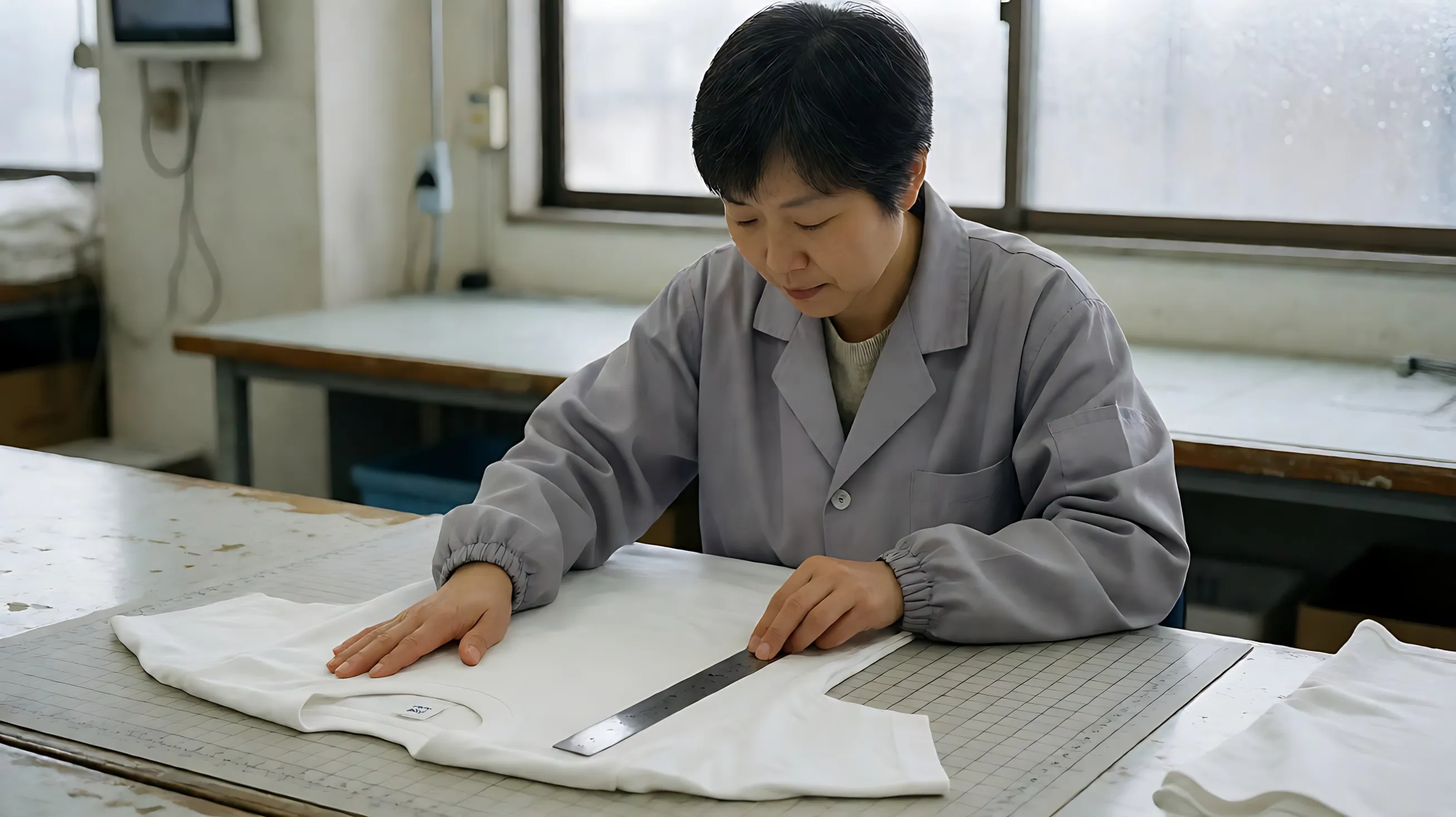
Short answer: nothing — and that is the point. Fabric is made to numbers: weight, blend, knit, shrinkage. "Good quality fabric" appears in thousands of custom apparel enquiries, and no production line on earth can manufacture to it. Quality adjectives are opinions. The reviews tell the story from the other side: tees so thin you can see through them, fabric nothing like the sample, garments that feel different from the listing — all ordered against adjectives, all delivered to spec, technically. This guide turns "good quality" into fields you can write into an RFQ and check at inspection.

Why does vague fabric language cost you money?
Sourcing forums carry a warning worth memorising: every vague point in your specification will be filled with the least expensive option that is still technically correct. Fabric is where that bites hardest — it is the largest single input in a custom garment's
unit price
, and the widest space for quiet substitution. Two garments can share a style code while one is cut from a compact, well-knit cloth and the other from an open, loose one; only numbers separate them.Take away: any order above giveaway grade needs the numbers. A one-off event tee can survive on "whatever's soft"; a uniform programme, a retail line or anything with your label in the neck cannot.
What does the GSM number tell you — and what does it not?
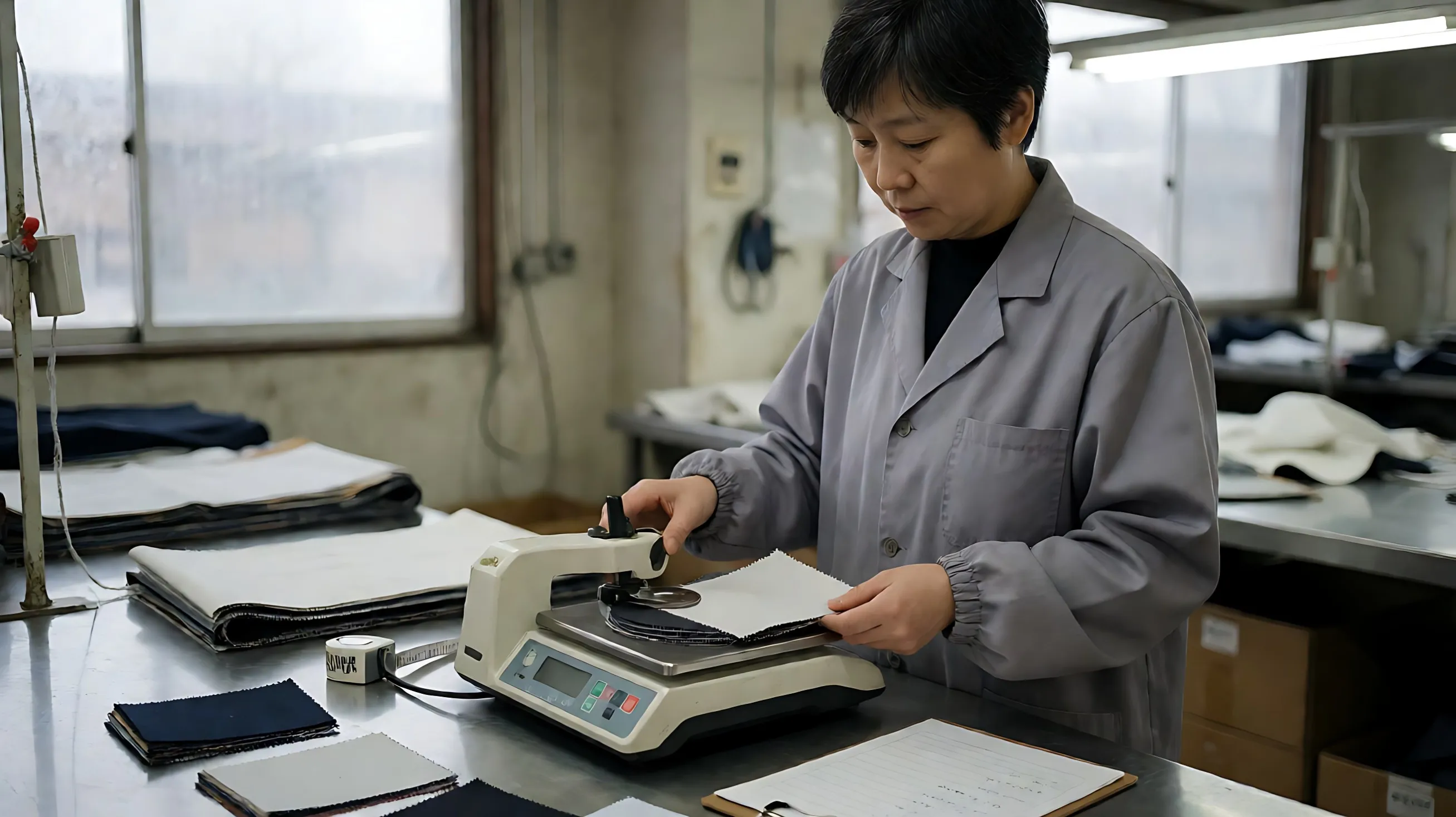
GSM is grams per square metre — the weight of the knitted fabric. As a rule it tracks heft, opacity and drape; as a specification it has limits, because the same GSM in different blends or knits feels like different cloth. What GSM does give you is a number both sides can measure. Bands by end-use, to be confirmed against your own sample:
• Lightweight tees and tropical wear: [XX]–[XX] GSM
• Standard staff and event tees: [XX]–[XX] GSM
• Polos and structured shirts: [XX]–[XX] GSM
• Hoodies and sweatshirts: [XX]–[XX] GSM
Two fields make the number real: the target GSM and the tolerance around it (±[XX] GSM), so a declared [XX] GSM fabric cannot quietly arrive at the bottom of a lower band.
Take away: set the band by end-use and climate, then hold it with a tolerance. In hot and humid markets, comfort pushes toward the lower half of each band — though not through its floor, where tees turn sheer and wear out fast (
the climate guide
covers that trade-off).
Where does the hand feel actually come from?
Hand feel is mostly blend and knit, not weight. Fibre content sets the behaviour: cotton breathes and feels natural but creases and dries slowly; polyester wicks, keeps shape and dries fast but can feel slick; blends trade between the two.
Two yarn fields set the surface, and they are separate axes:
• Axis · Options · What it changes
• Fibre prep · Combed / carded · Combing removes short fibres — smoother, stronger yarn
• Spinning · Ring-spun / open-end · Ring-spun is finer and more even; open-end cheaper and fuzzier
The premium pairing is combed ring-spun; the budget floor is carded open-end. Knit construction completes the picture — single jersey for tees, pique for polos, fleece for hoodies — and belongs in the spec, because a "hoodie" in two different knits is two different garments.
Take away: write the blend exactly, ratio included: a [XX] cotton / [XX] polyester blend is a specification; "cotton-rich" is a vibe.

Which three tests actually matter?
Weight and blend describe the fabric; tests describe how it behaves after your staff wear and wash it:
• Shrinkage: state the maximum you will accept, length and width, after a standard wash — [XX] for this programme. Beyond the number, the garment stops matching the size chart your breakdown was built on.
• Colour fastness: resistance to washing, rubbing and light, graded on standard scales — what separates a uniform that survives a term of hot washes from one that fades grey by week six. Grades go in the spec, with reports available upon request.
• Pilling: the fuzz on rubbed areas of poly-heavy fabric; a pilling-resistance grade keeps garments from aging into sofa covers.
These are exactly the checks an inspector can verify on the production lot under
AQL inspection terms
— specified, they become gates; unspecified, they become feedback after delivery.Take away: match test intensity to laundry reality — domestic-cool washing needs modest grades; daily hot commercial washing needs the strictest you can buy.

What changes for hot and humid climates?
Tropical programmes fail on predictable fields, so weight the spec accordingly: blend leans toward performance polyester or cotton-rich blends that release moisture and dry overnight; fastness to washing and light carries the appearance through daily laundering and strong sun; shrinkage tolerance tightens, because hot wash-and-dry cycles move fabric more; and GSM sits toward the lower half of the band — heavy fabric in equatorial humidity is a complaint generator, not a quality signal.
Take away: same fields as a temperate spec, tolerances retuned — from Bangkok and Manila to Cartagena. The selection logic lives in the
climate guide
; this section is how you enforce it in writing.The fabric spec block you can paste into any RFQ
Copy, fill, attach — to the enquiry and again to the purchase order:
• FABRIC SPECIFICATION
• Knit type: single jersey / pique / fleece (state one)
• Weight: [XX] GSM, tolerance ±[XX]
• Blend: [XX] cotton / [XX] polyester
• Fibre prep: combed / carded (state one)
• Spinning: ring-spun / open-end (state one)
• Construction: side-seamed / tubular (state one)
• Colour: Pantone [XX] or approved lab-dip reference
• Shrinkage: max [XX], length and width, after one standard wash
• Colour fastness: wash [XX] grade minimum; light [XX] grade minimum
• Pilling: grade [XX] minimum
• Finish: pre-shrunk / enzyme-washed / wicking (as applicable)
• Benchmark: bulk fabric to match signed sample, same dye lot where possible
Ask the supplier to confirm each line in writing, not with a tick. A line they cannot confirm — a shrinkage maximum, a fastness grade — is a finding before the deposit, the cheapest place to find it.
Take away: the block is deliberately one screen long. Fields you cannot verify at inspection do not belong in it; every field above can be measured on the production lot.
Frequently Asked Questions
What GSM should I specify for staff t-shirts?
The band your own sample falls in — commonly [XX]–[XX] GSM — with a tolerance of ±[XX]. The number should come from a garment your team has worn and washed, not from a catalogue adjective.
Does a higher GSM always mean better quality?
No. Weight tracks heft and opacity; quality lives in the yarn, the knit and the finishing. A well-knit lighter fabric outperforms a loose, heavy one — and in hot climates, "heavier means better" is exactly backwards for comfort.
How do combed, ring-spun and open-end cotton differ?
They are two different axes. Combing is fibre preparation — removing short fibres for a smoother, stronger yarn — while ring-spun and open-end are spinning methods: ring-spun is finer and more even, open-end faster and fuzzier. That is why the spec block carries two separate lines, and why "combed ring-spun" is the premium pairing.
How much shrinkage should I expect?
Depends on the blend and the wash: cotton moves more than poly blends, hot tumble drying moves everything. Specify the maximum you will accept per direction — [XX] — and verify it on the sample with one wash before releasing bulk.
Which fabric works best in hot and humid climates?
Moisture-releasing blends in the lower half of the GSM band, held to strict wash-and-light fastness grades. The spec block above is how you enforce that choice on bulk.
How do I make sure bulk fabric matches my sample?
Three locks: the spec block with tolerances, a signed sample retained on both sides, and a fabric check at inspection against both. Dye lots legitimately drift — "same dye lot where possible" plus a shade tolerance covers that honestly.
Can I supply my own fabric?
Some programmes accept it, with conditions: the fabric must be testable against the spec, and responsibility for lot faults shifts to the buyer. It suits buyers with an existing fabric relationship; for everyone else, specifying and auditing the supplier's fabric is simpler.
Writing a fabric spec for your next order?
Request a Quote
— knit, weight, blend and test grades quoted line by line, bulk matched to your signed sample. Or compare candidates across the product range
first.FACTS