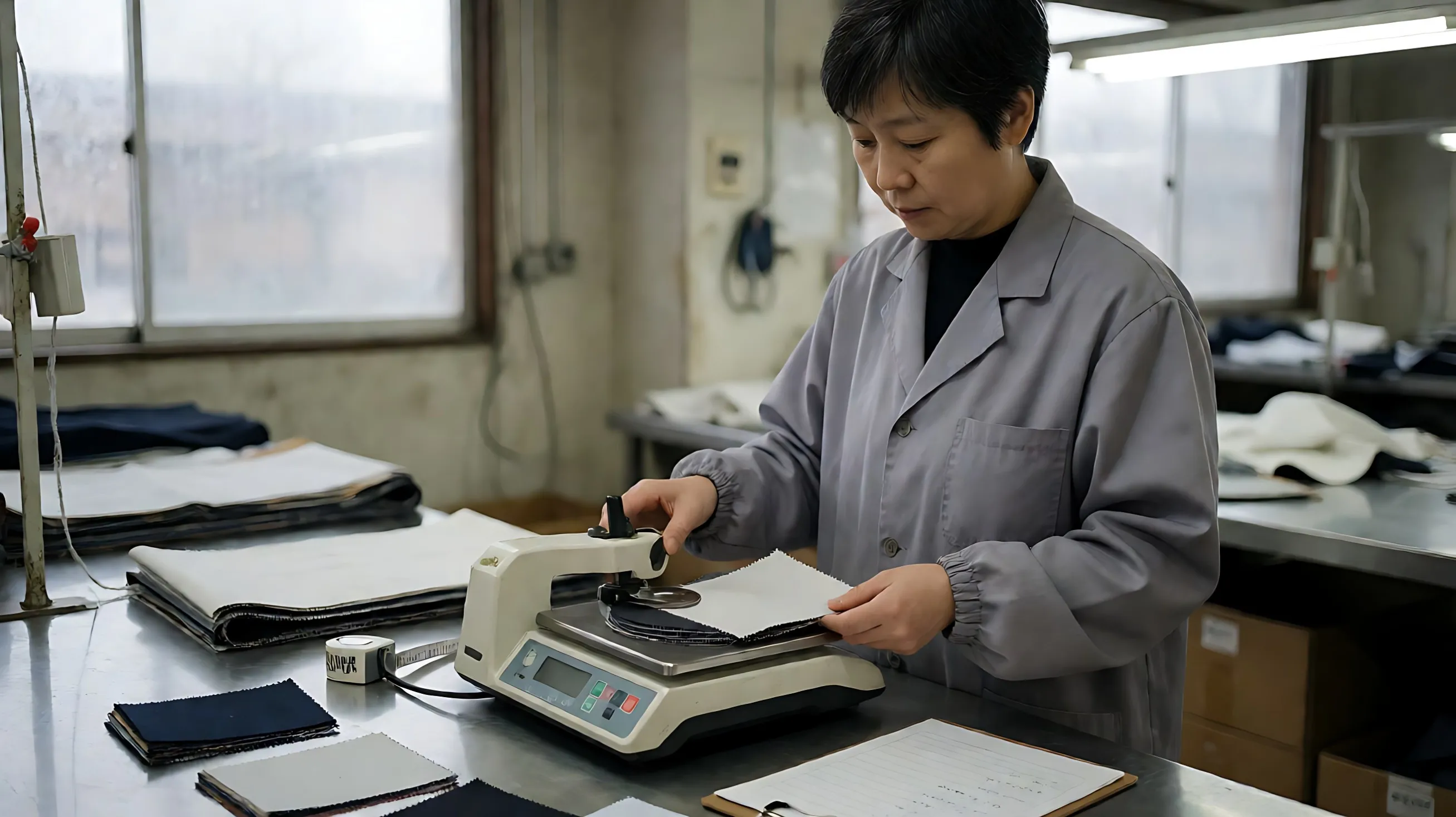
Oct 3, 2026
Apparel Size Tolerance: Can You Trust the Size Chart on Bulk Orders?
Order from a measured sample, not the chart. The tolerance to accept, the ratio table to plan from, and the four lines that must be in writing before bulk production starts.

Short answer: not on its own. A size chart describes the pattern block's intent; the garments you receive are that chart plus cutting tolerance, fabric relaxation and wash shrinkage. Order from a measured sample of each size, agree a written tolerance of ±[XX] cm per measurement point, and build your staff breakdown from real fittings rather than self-reported sizes.
• If you… · Then use… · Because…
• Need one-off giveaway tees · The size chart · A one-size miss costs little
• Are ordering uniforms people wear daily · A washed, measured sample of every size · Chart drift is invisible until the first wash
• Run a recurring uniform programme · Sample + written tolerance in the PO · Reorders must match the first run
• Have no time to sample at all · The chart plus a spare buffer of [XX] pieces · You are buying insurance instead of control
Custom apparel reviews run on one repeated complaint: garments praised for print quality, returned in spirit because the medium fits like a small — and because personalised goods cannot be restocked, a misjudged size curve is a write-off, not an exchange.
Why does the same size label fit differently on every order?
"Medium" is one maker's pattern block, not a standard. Three variables move it. Blocks are house decisions shaped by the market each maker serves — a North American retail cut and a uniform block cut for tropical markets can differ a full size at the same label. Fabric moves it again: a loose knit relaxes differently from a compact one, and both shift after the first wash. Even the measuring method moves the number — pulled tight or lying flat, before laundering or after. A maker claiming zero variance is not describing a process; cutting is physical, and every measurement point lands in a band, not on a point.
Take away: treat every new supplier's chart as a new measurement system. Calibrate once with a measured sample set, then order with confidence.
What size tolerance should you accept on a bulk order?
A workable band for most measurement points is ±[XX] cm, agreed in writing and applied at inspection, with wider bands on curved sections than on straight seams. Tolerance covers three measurements separately — chest width, body length, sleeve length — because each drifts independently. The inspection question is never "is this one shirt perfect"; it is "how many units sit outside the band", and above an agreed share of [XX], the lot is disputed.
Tighter bands than standard are purchasable, priced through slower cutting and heavier checks per run. Pay for them where the garment is client-facing; skip them for giveaway tees.
Take away: ask for the tolerance table before ordering. A maker who can state their bands has measured their own operation — that answer tells you more than any promise of perfection.
Should you order from the size chart or a measured sample?
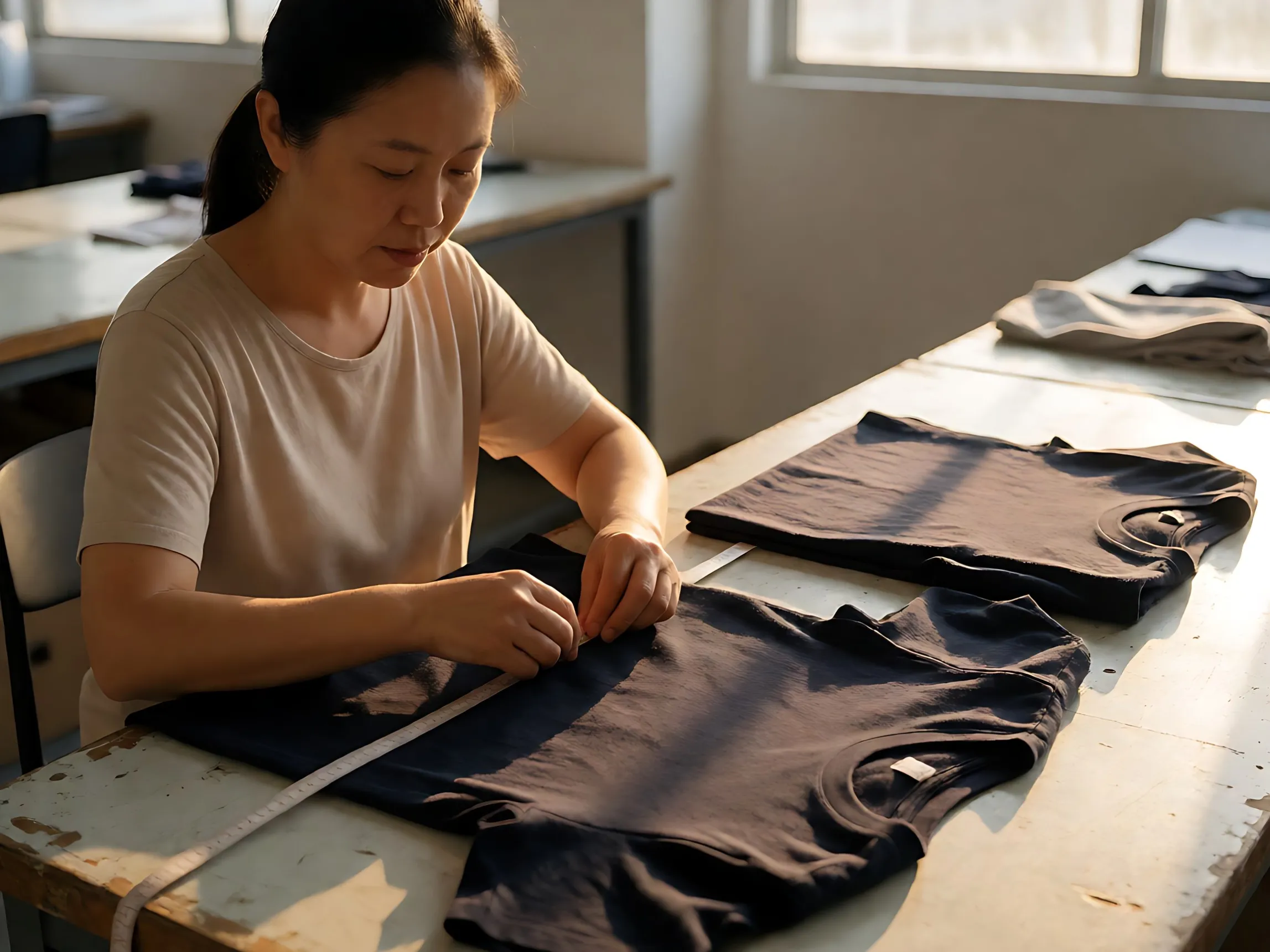
From a measured sample, once the order matters. The professional instrument is a point-of-measure sheet: a diagram naming each measurement, where exactly it starts and stops, and the tolerance per point. Measure one sample of each size yourself — flat on a table, after one wash if the programme involves hot laundering — and compare against the sheet before committing the size break. For buyers in Southeast Asia and the Americas, one extra caveat applies: regional fit blocks differ, so a chart that was accurate for a supplier's last customer can still be wrong for yours.
Take away: use the chart to shortlist, the measured garment to commit. It is the cheapest insurance in this article.

How do you build a staff size breakdown without guessing?
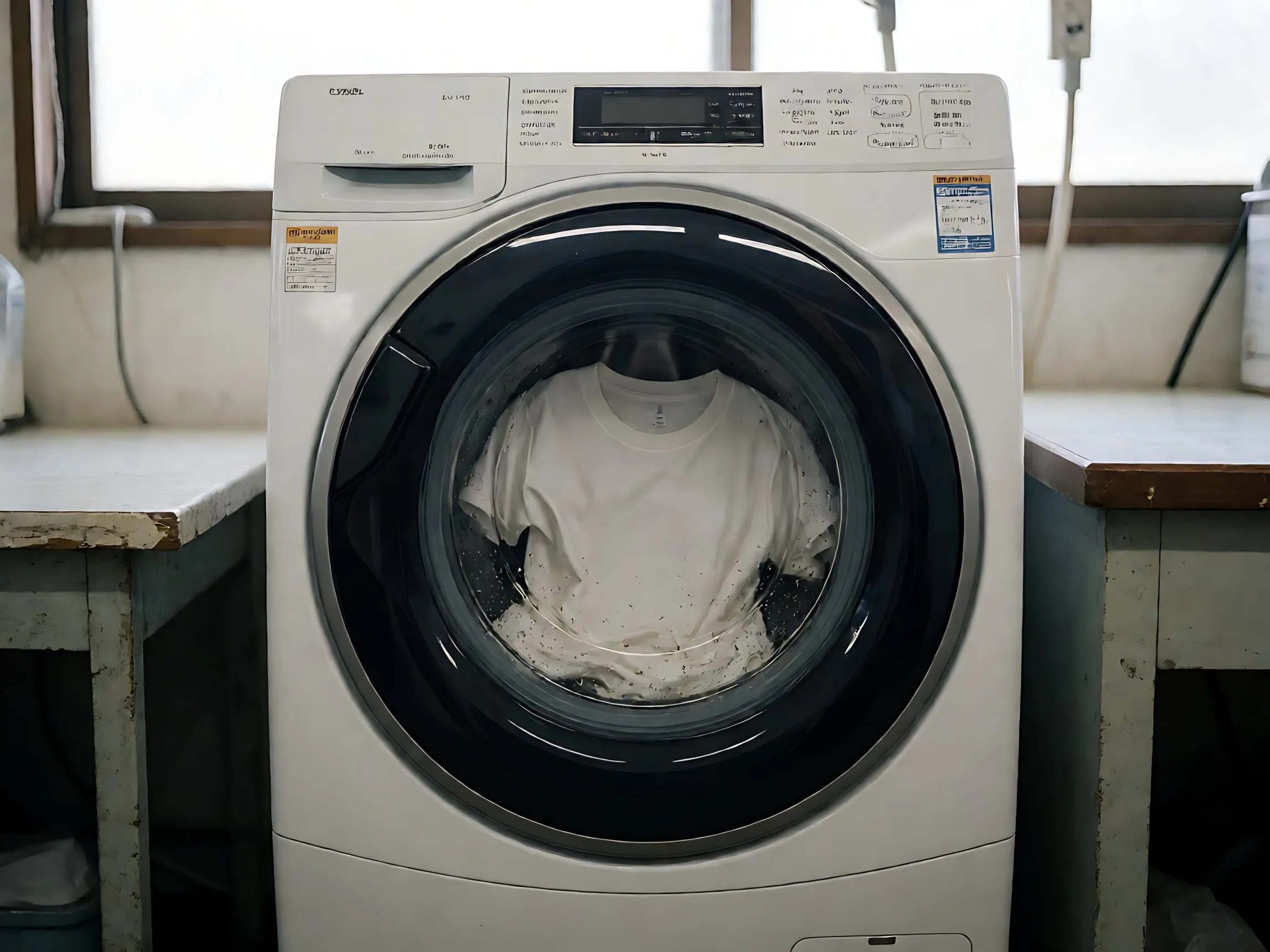
Emailing staff for their size is the least reliable method — people report the size they aspire to, and rosters built on self-report under-order the upper half of the curve. What works is a fitting panel plus wardrobe mining: from your sample set, have real staff try each size, including the smallest, tallest and broadest people on the roster; then note the labels of garments people already wear happily every shift.
A ratio table is the planning default for groups you cannot fit individually — competitors commonly publish curves in this shape:
• Size · Typical share of order
• S · [XX]
• M · [XX]
• L · [XX]
• XL · [XX]
• 2XL and up · [XX]
Treat any ratio as a starting point to be corrected by your own fitting data, add a deliberate buffer of [XX] pieces per core size for new starters, and collect sizes in the same roster file as names and numbers — one file closes both the sizing and the personalisation risk.
Take away: a measured breakdown costs one sample set and one fitting session; a guessed breakdown costs whatever share of the order lands on the wrong bodies, and it cannot be reprinted.
What about extended sizes, youth sizes and the tails of the curve?
Extended sizes — 3XL and up — sit later in the production queue and often carry an upcharge of [XX] per piece, so ordering them as an afterthought makes the colleagues who need them wait the longest. Youth sizes are graded on a separate block: a "same design for the whole family" order is really two size systems in one purchase order, and minimums count the whole order, not each block. Tails ordered too lean strand the next intake of new hires; tails ordered too heavy tie up cash in a cupboard.
Take away: plan youth and extended quantities from the roster you actually have, not from a generic curve.

What should be confirmed in writing before bulk starts?
Four lines, one page:
1. The point-of-measure sheet with tolerance bands, attached to the purchase order — the same clause pattern that makes AQL inspection terms enforceable.
2. The confirmed size break table, locked after your sign-off; later changes by written variation, not phone calls.
3. Retained samples: one garment per size, held by both sides as the physical reference.
4. The responsibility split: a mis-cut outside the agreed bands is the maker's rework; a distribution you confirmed in writing is yours to absorb.
Take away: if a supplier resists writing tolerances down, that is the finding. Decide the responsibility split before production — it is the entire game.
Frequently Asked Questions
What is an acceptable size tolerance for bulk apparel?
A band of ±[XX] cm per measurement point is workable for most garments, with chest, length and sleeve each carrying its own band. The number belongs in your purchase order, not in a conversation.
Why does the medium fit like a small?
Because "medium" is one maker's block, and blocks, fabrics and measuring methods all vary between suppliers. One measured sample set from your actual order recalibrates the whole chart.
Should I order from the size chart or a measured sample?
From a measured sample once the order matters; the chart only shortlists. Wash the sample once, measure it flat, and compare every size against the point-of-measure sheet.
How do I collect sizes for a whole team?
A fitting panel plus wardrobe mining: real staff try each sample size, and the garments people already wear happily stand in as verdicts. Avoid self-reported sizes by email — they skew the curve small.
How many spare pieces should I order for new hires?
A deliberate buffer per core size — commonly [XX] pieces — sized against your hiring rate over the next order cycle. Buy spares against a forecast, not a feeling.
Can I mix youth and adult sizes in one order?
Yes. Youth sizes are graded on their own block and minimums count the total order across both; confirm the youth block's measurements separately, because it is a different pattern system wearing the same design.
What happens if the size breakdown is wrong after production?
Split by cause: pieces cut outside the agreed tolerance bands are the maker's to rework or credit; a distribution error you signed off is absorbed on your side. This is why the break table is confirmed in writing before bulk starts.
Checklist before you release the size break
☐ Measured sample of every size, after one wash, checked against the POM sheet
☐ Tolerance bands written into the purchase order
☐ Size break table signed and locked
☐ Retained samples on both sides
☐ Spare buffer added for core sizes
☐ Youth and extended sizes ordered from the real roster
Wrong sizes cannot be returned — control them instead.
Request a Quote
with your headcount, and the size set, tolerance bands and breakdown are confirmed in writing before production starts. Or review custom workwear
and team programmes first.FACTS